Reliable Podcast Distribution Services for Businesses
With roughly 584 million monthly podcast listeners worldwide and over 4.6 million active shows competing for attention, getting your episodes in front of the right audience requires more than uploading a file and hoping for the best. Podcast distribution services are the backbone of a reliable publishing workflow - and for professional shows, they're the difference between consistent growth and avoidable chaos.
This article maps out exactly what these services involve, how the underlying technology works, and where professional guidance makes the biggest impact.
What Podcast Distribution Services Actually Do (and Why They Matter)
Podcast distribution services are the process and tooling that move finished podcast episodes from a hosting platform out to listening apps like Apple Podcasts, Spotify, YouTube, and Amazon Music. They store audio files, generate an RSS feed, manage metadata, handle platform submission, and maintain consistent publishing across major platforms.
This is different from production (recording, editing, mixing) and different from basic podcast hosting (which covers storage and feed generation alone). Most podcast hosts also provide distribution services, but the distribution layer adds submission workflows, metadata standardization, and monitoring across directories.
For professional shows, the goal isn't simply "be listed everywhere." It's about being reliably everywhere, on time, with correct branding. Effective podcast distribution enhances visibility on major platforms - but only when the workflow is airtight.
You'll sometimes see terms like podcast publishing services or podcast hosting distribution used interchangeably. They typically describe the same overall workflow. Here's what this article covers:
How RSS powers the entire system
What platform submission actually requires
Choosing a hosting platform built for distribution
Managing multiple shows under one workflow
Metadata, analytics, monetization, and marketing integration
When to bring in professional help
Core Components of a Professional Podcast Distribution Workflow
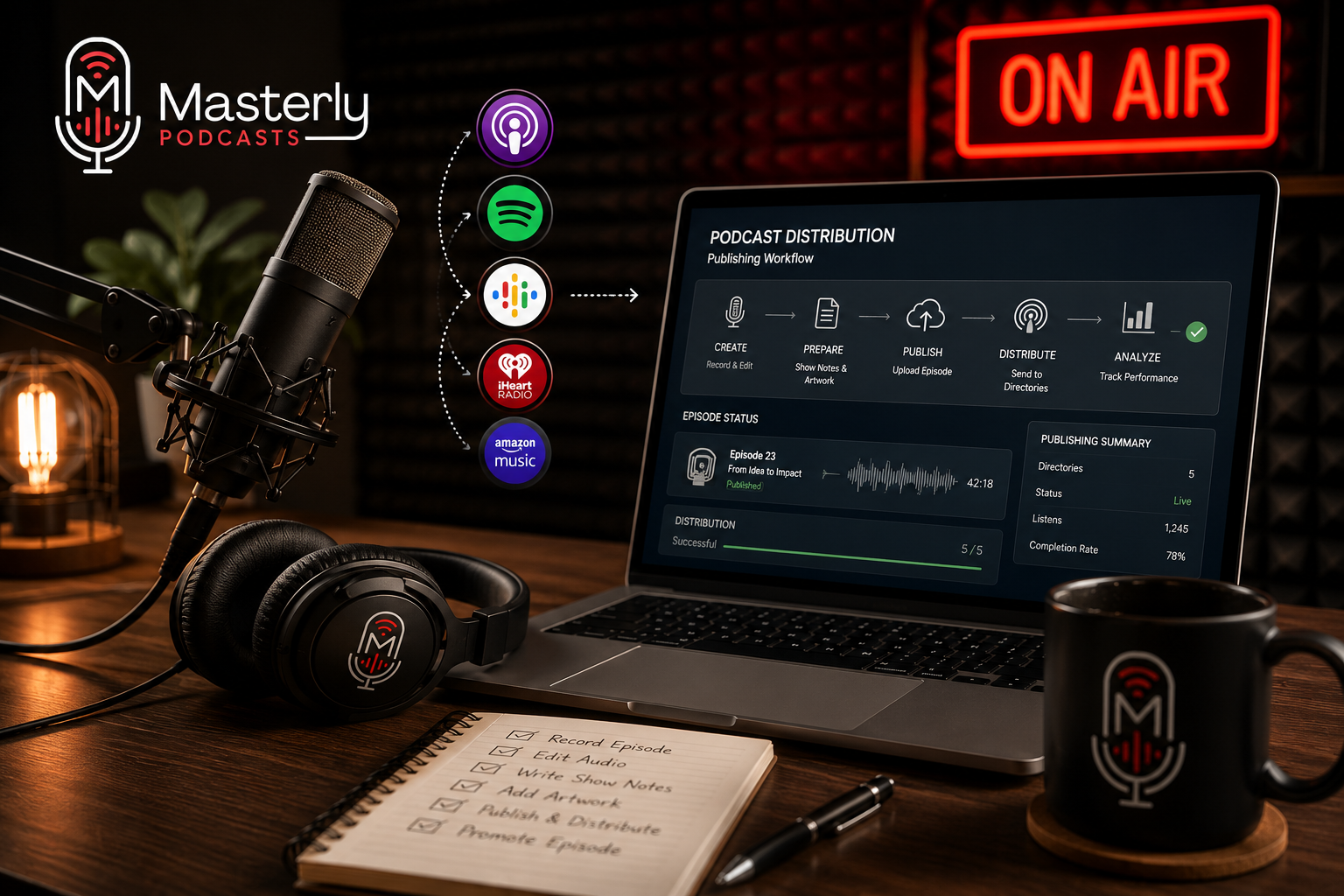
The end-to-end journey looks like this: final audio file → upload to a hosting platform → RSS feed updates → directories pull new episodes → listeners' podcast apps display the episode → analytics feed back into optimization.
The non-negotiable building blocks for that workflow include:
A reliable hosting provider with high uptime and fast CDN delivery
A well-structured RSS feed with all required tags
Consistent episode metadata (titles, descriptions, season/episode numbers)
Cover art meeting directory specs (typically 3000×3000 px JPEG or PNG)
Clear ownership of the feed so migrations don't break subscriber access
Scheduling tools that let teams schedule episodes and manage approval steps
Many platforms automatically submit RSS feeds to directories, which means producers don't manually log into each portal for every release. Distribution services simplify managing multiple podcast submissions by consolidating these steps into one platform. These services allow uploads to multiple directories with one action, keeping your episodes online across every app without last-minute scrambles.

How RSS Distribution Powers Podcast Publishing Services
An RSS feed is a structured, machine-readable file that lists your episodes with titles, descriptions, media URLs, duration, and episode metadata. RSS feeds act as digital syndication links for podcasts - they're the technical backbone that makes the entire ecosystem work.
Here's what matters: popular podcast apps like Pocket Casts, Overcast, and the top listening apps don't store your audio. They read your podcast feed, then pull audio from your hosting provider every time a listener hits play. When you publish new episodes, your host auto-updates the RSS feed, and podcast apps poll for changes every one to six hours.
Feed stability is critical. If you change hosts without setting up a proper 301 redirect - say, moving from https://oldhost.com/feed.xml to https://newhost.com/feed.xml - subscribers can lose access entirely. A 301 redirect tells apps to follow the new URL seamlessly, preserving your audience through the migration.
This is why RSS distribution remains the foundation. Even platforms that cache or replicate content ultimately depend on a valid, well-formed RSS feed.
Platform Submission: Apple Podcasts, Spotify, YouTube, and Beyond
The vast majority of professional shows should prioritize these top podcast directories:
Apple Podcasts - submit via Apple Podcasts Connect; approval typically takes 24–72 hours
Spotify - submit through Spotify for Podcasters; Captivate allows one-click submissions to major directories like Spotify
YouTube - upload video podcasts or audio-with-image episodes to your YouTube channel for podcast playlists
Amazon Music - submit via Amazon Music for Podcasters
Regional apps - Deezer, Anghami, and others for international audiences
The submission process is one-time: you provide your RSS feed URL, verify show ownership (usually via email), and wait for approval. Podbean enables automatic distribution to Apple Podcasts and Spotify, and Transistor publishes podcasts on platforms like YouTube and Spotify as part of their automatic distribution setup.
Once the initial submission is complete, you don't upload each episode individually. Publishing from the host is enough - directories pull updates from your RSS feed automatically. The whole setup can take just a few minutes per directory.
A practical checklist for initial platform submission:
Validate your RSS feed for required tags
Confirm cover art meets size and format specs
Set title, category, language, and explicit content flags
Submit direct links to each portal and track approval status
Verify listings in Apple Podcasts Spotify and other directories before marketing
Confirm you can access and manage the podcast directly from each platform's dashboard

Choosing a Hosting Platform Built for Distribution (Not Just Storage)
Your podcast hosting platform sits at the center of podcast hosting distribution. It stores episode files, generates the RSS feed, and typically offers submission tools for major apps. If hosting breaks, everything downstream breaks.
Critical criteria for professional podcast hosting solutions:
Uptime and reliability - look for CDN-backed delivery and strong SLA commitments
Multi-show support - Transistor allows hosting multiple podcasts on one account, which matters for brands and networks
Private and exclusive content - support for private feeds and members only podcast episodes
Content ownership - clear terms confirming you own your content and can migrate freely
Advanced features - user roles for teams, hls video support for video podcasts, API access, and integrations with marketing tools and CRMs
Support team - responsive help when directory issues or feed errors arise
What defines the best podcast hosting platform depends on your use case. A single podcast from a solo creator has different needs than a brand running a podcast network. Ad-supported shows need dynamic ad insertion; membership-driven shows need subscription feed management.
Several podcast hosting providers stand out at scale. Podbean hosts over 600,000 active podcasts and over 12.5 billion downloads, and provides IAB-certified podcast analytics across all hosting plans. Podbean also offers AI Audio Optimization for post-production. Buzzsprout is trusted by over 115,000 podcasters, offers automatic high-quality transcripts for accessibility, and provides Magic Mastering for studio-quality sound. Captivate offers a 30-day free trial (essentially a free month to evaluate the platform), and its platform includes an integrated guest booking feature. Alitu automates audio cleanup and transcription for episodes, streamlining production before distribution.
On cost: free hosting and free plans can work for early experiments, but professional shows benefit from paid plans that offer all the tools needed for reliable distribution. Some hosts use upload-based pricing (storage or hours of content); others charge by downloads or bandwidth. Best podcast hosting isn't about headline price - it's about long-term reliability, data integrity, and whether the podcast hosting site scales with your audience. A free podcast option might get you started, but a podcast hosting service built for distribution keeps you growing.
Managing Multiple Podcasts and Networks Under One Workflow
Organizations running multiple podcasts - a public thought-leadership show, an internal training feed, and event-series recordings - benefit enormously from centralized podcast management. Running multiple shows under one workflow means shared metadata templates, global branding rules, unified analytics, and less login sprawl.
A hosting platform that supports this well provides:
Separate RSS feeds with unique cover art and categories per show
One billing account and shared user permissions across titles
Cross-promotion tools to insert promos across shows automatically
Bulk platform submission for new directories
Consistent episode metadata standards across all titles
For example, a company might host multiple podcasts: a flagship brand podcast, a members-only training series using private podcasting, and a seasonal event podcast. Each has distinct artwork and audience, but all operate under one account with shared editorial standards. This makes onboarding new team members easier and keeps scheduling visible in a single calendar.
The operational benefit is straightforward: less redundancy, fewer errors, and the ability to host multiple podcasts without multiplying administrative overhead. This is where a true podcast network workflow pays off.
Episode Metadata, Show Notes, and Compliance Across Platforms
Episode metadata includes titles, descriptions, show notes, episode and season numbers, content warnings, categories, language tags, and artwork. Even one episode with incorrect metadata can hurt discoverability and erode trust.
Why consistency matters:
Search inside Apple Podcasts and Spotify relies heavily on title formatting and category tags
Show notes embedded on a podcast website contribute to SEO and drive organic traffic
Inconsistent naming confuses algorithmic recommendations
Platform-specific quirks to watch:
Apple Podcasts limits descriptions to 4,000 characters; Spotify may truncate further
"Episode 1 –" title prefixes can be redundant if you're already using episode number tags
Artwork must meet directory specs (3000×3000 px, correct color space, no special characters in filenames)
Explicit content flags must be set accurately to avoid miscategorization
Accessibility and compliance considerations include transcripts or captions (critical for video podcasts on YouTube), music licensing statements, and explicit content flags. Buzzsprout offers automatic high-quality transcripts that address accessibility requirements directly.
Robust podcast distribution services standardize metadata templates so every new episode meets platform submission rules without manual re-work. This is especially valuable when multiple team members contribute to publishing.
Detailed Podcast Analytics: Measuring Reach and Refining Distribution
Detailed podcast analytics typically include downloads per episode, breakdowns by listening apps (Apple Podcasts, Spotify, web-based podcast player), geographic distribution, device types, and time-of-day trends. Distribution services provide comprehensive analytics on listener trends that go well beyond basic stats.
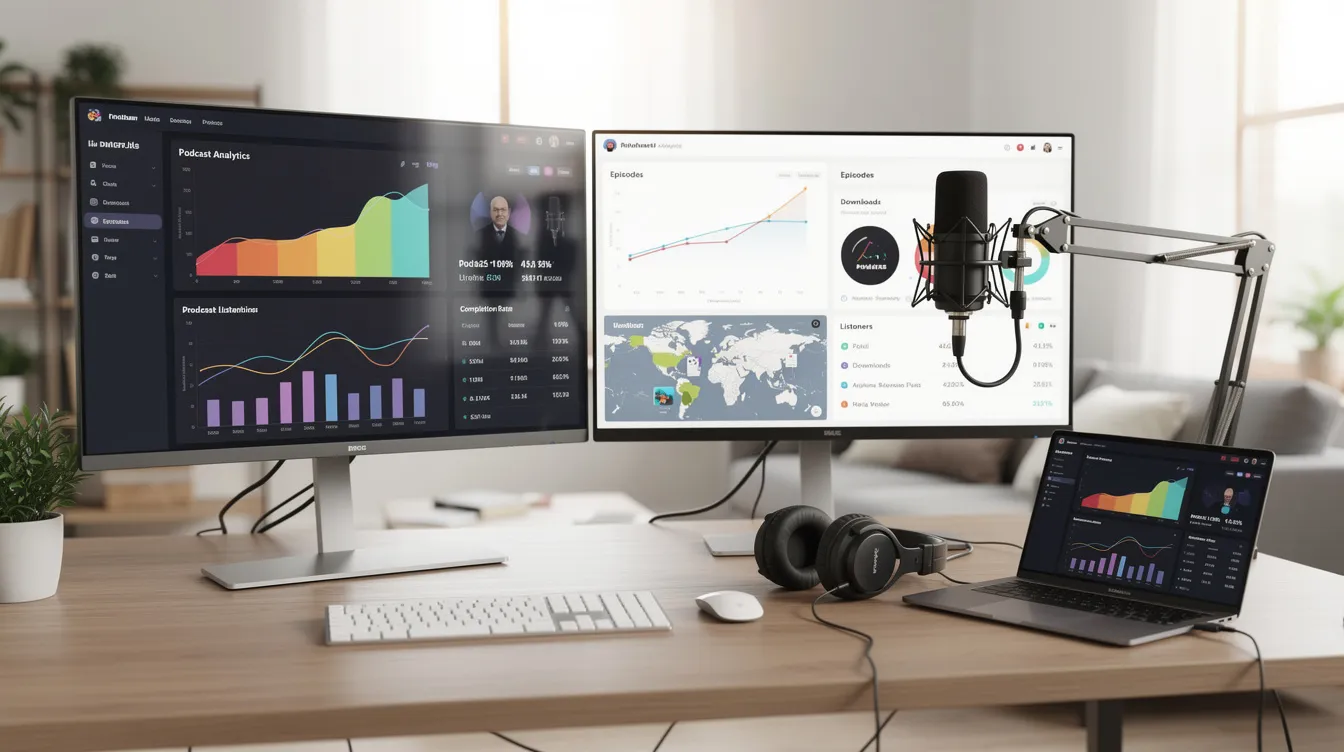
Podcast analytics are based on downloads and streams, not traditional pageviews. IAB-compliant measurement standards define what counts as a valid download, making engagement metrics comparable across platforms. Captivate is the first IAB Tech Lab 2.2 certified podcast host, and Podbean provides IAB-certified podcast analytics for all hosting plans - giving advertisers and sponsors confidence in reported numbers. These are referred to as iab certified analytics in the industry.
Platform-specific insights worth tracking:
Buzzsprout's advanced analytics track downloads by episode and location, helping you spot geographic growth
Captivate offers advanced analytics included on every plan, covering listener trends and retention
Transistor provides detailed analytics on average downloads and trends across a single episode or entire catalog
Basic analytics from free plans may cover top-level download counts but miss the granularity needed for optimization
How analytics guide distribution decisions: if data shows most growth comes from Android apps rather than Apple Podcasts, adjust promotional focus. If a YouTube-hosted version outperforms audio-only, invest in video production. If a particular directory contributes under 1% of downloads, it may not warrant dedicated marketing spend. Professional services translate raw numbers into recommendations on release timing, episode length, and promotional focus - and they can flag issues like fan mail responses dropping or directories failing to fetch updates.
Monetization, Exclusive Content, and Private Feeds in Distribution Strategy
Distribution choices directly shape how you monetize your podcast. Podcast distribution services offer monetization tools for creators across several models:
Ad-supported: Podbean offers Ads Marketplace for monetization; Buzzsprout enables control over ads in podcast episodes; dynamic ad solutions are available for monetization on Captivate
Subscriptions and memberships: Buzzsprout allows paid subscriptions for podcasts; Captivate supports paid memberships and one-off tips
Exclusive content: Podbean integrates Apple Podcasts Subscriptions for exclusive content distribution; private podcasts can deliver bonus episodes or early access to paying members
Dynamic content insertion lets you swap ads or promos without re-uploading episodes
Private feeds require careful architecture. A members only podcast or private training feed must stay separate from your public RSS to prevent premium content from leaking into free directories. Misconfigured subscriber tags or feed paths are a common source of problems.
Strategic trade-offs exist: strict control over private podcasting increases workflow complexity and hosting costs. Ad-supported models need high listener volume on public platforms. Subscription models require trust and consistent value. The right approach depends on audience size, brand credibility, and production resources.
Integrating Marketing Tools with Your Distribution Workflow
Being listed on top listening apps is the baseline. Driving consistent listeners requires coordinated marketing that connects to your distribution stack.
Typical marketing touchpoints per episode:
Pre-launch: teaser clips on social media, announcement in email newsletter
Launch day: automated email to subscribers, social posts with episode links, embed a podcast player on your podcast website or blog post
Post-launch: follow-up reminders, repurposed quotes or short clips, cross-promotions across multiple podcasts
Many hosts provide a free podcast website or embeddable players as part of their marketing tools. More advanced setups integrate CRMs, conversion tracking, and retargeting. Automations can trigger new-episode notifications to email lists, auto-post audiograms to social channels, and schedule promotional content - so the marketing layer runs alongside distribution rather than as an afterthought.
The open podcasting ecosystem, supported by a grassroots industry coalition dedicated to maintaining open standards and interoperability, benefits when marketing drives listeners back to open RSS-based apps rather than locking them into a single platform.
When to Bring in Professional Podcast Distribution Services
Common trigger points for seeking expert help:
Launching a first podcast tied to brand reputation or executive visibility
Operating multiple shows across regions or business units
Migrating from one hosting provider to another (risk of lost subscribers, broken feeds)
Standardizing an inconsistent publishing process that relies on manual workarounds
Planning monetization or subscription content for the first time
The specific risks professionals mitigate include broken RSS feeds, lost subscribers during migration, incorrect Apple Podcasts or Spotify listings, and duplicated shows in directories. These aren't hypothetical - they're the most common failures that undermine an otherwise successful podcast.

Expert guidance means platform submission done once and correctly, documented workflows for internal teams, and a single point of accountability when something goes wrong. The outcomes are reliability, consistency, and data-driven refinement - publishing that works every time, not just most of the time.
Request a podcast distribution consultation to assess your current setup and design a publishing workflow built for professional-grade consistency.
