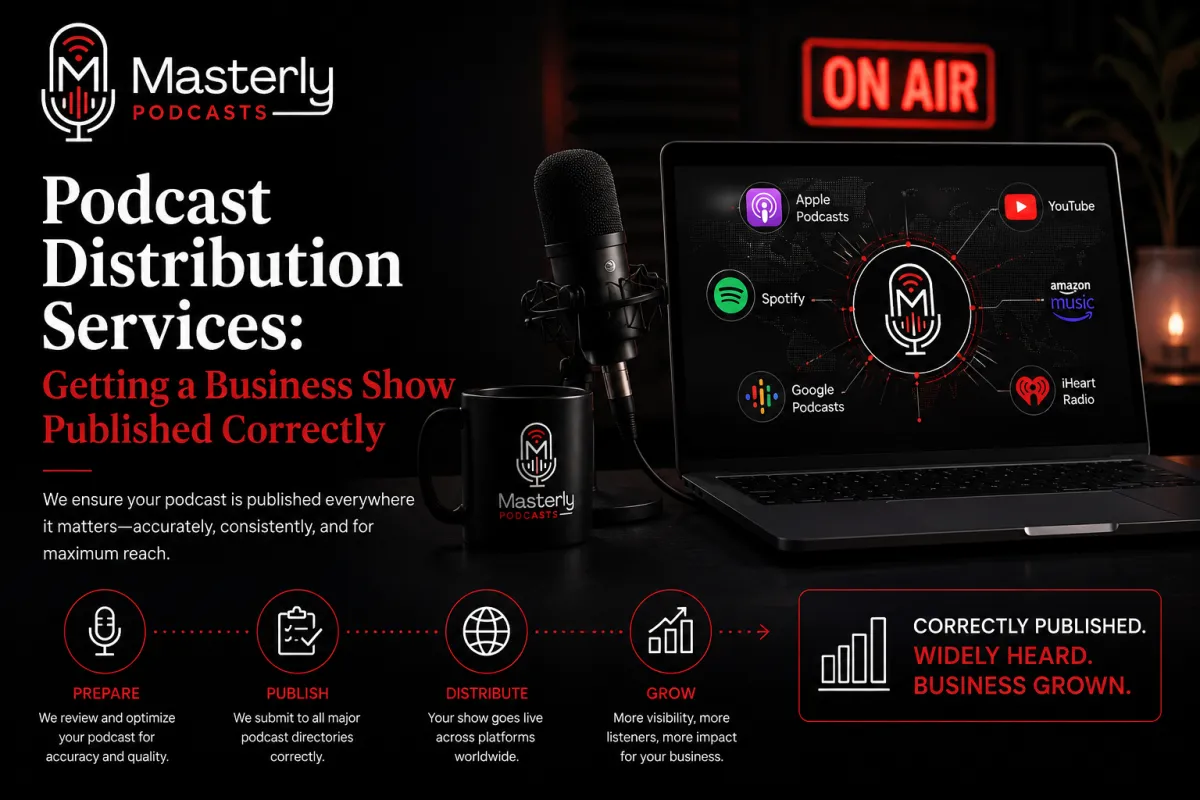
Podcast Distribution Services: Getting a Business Show Published Correctly
Podcast Distribution Services: Getting a Business Show Published Correctly
Introduction: What Podcast Distribution Services Do for Business Shows
In 2026, podcast distribution services bridge the gap between a recorded episode and a live listing across every major listening app. These services store audio files and generate an RSS feed, then submit and maintain that feed across directories so your show appears on Apple Podcasts, Spotify, YouTube, Amazon Music, iHeartRadio, and beyond. When new episodes are published, distribution services automate updates to every connected platform without manual re-uploading.
For business podcasters, this matters far more than convenience. Your podcast exists to build authority, generate leads, and support a sales pipeline. That means it needs to be findable wherever your ideal clients listen. Podcast distribution services help reach a wider audience by simplifying uploads and ensuring consistent metadata across platforms. Podcasts can be listed on Apple Podcasts and Spotify within days of submission, and that same feed syndicates content automatically to dozens of additional apps.
This article covers launch support, ongoing distribution, analytics (including IAB certified stats), show notes, and how to decide between DIY setup and done-for-you podcast launch services.
Core benefits for business podcasts:
Visibility across every app where decision-makers listen
Authority through polished, consistent presence in trusted directories
Discovery via search, recommendations, and SEO from transcripts and show notes
Repurposing potential from episodes into video, social clips, and blog content
Feed stability that protects subscriber confidence and marketing links
How Podcast Distribution Services Fit into a Business Podcast Launch
Distribution setup is not a final step - it sits near the middle of a podcast launch timeline and influences everything that follows. A typical B2B or executive-hosted show follows this sequence: strategy and positioning, recording pilot episodes, choosing a podcast hosting platform, submitting the RSS feed for approval on listening apps, then running an initial marketing push.
For most directories, you should begin distribution setup two to four weeks before your official launch date. Apple Podcasts requires a human review of your feed, artwork, and metadata, and resubmission after a rejection costs valuable time. Professional podcast launch services package this entire phase: artwork creation, show description writing, trailer episode production, show notes templates, directory submissions, and embedding a branded podcast player on your website.
A proven tactic is the "soft launch" - quietly publishing two to three podcast episodes before your coordinated announcement. This lets you confirm feeds are stable, directories are indexing correctly, and your audio sounds right across apps. Once everything checks out, you execute the big launch with email campaigns, social promotion, and guest cross-promotion.

Business podcast launch checklist (distribution-focused):
Create and validate the RSS feed using a feed validator tool
Submit to Apple Podcasts, Spotify, YouTube, Amazon Music, iHeartRadio, Pocket Casts
Design cover artwork to spec (square, 1400×1400 to 3000×3000 px, JPEG or PNG, RGB)
Write show description with categories and explicit content flags
Record and publish a trailer episode
Soft launch 2–3 episodes before the public announcement
Verify propagation across all submitted platforms
Core Components of a Modern Podcast Hosting Platform
A podcast hosting platform does three things at the technical level: it stores your audio and video files, generates the public RSS feed, and connects that feed to directories like Apple Podcasts and Spotify. Podcast distribution services often combine hosting and distribution functions into one platform, which simplifies management.
Using generic website hosting instead of a dedicated platform is a mistake for business shows. Dedicated hosting platforms provide feed reliability, proper enclosure tags, correct GUID handling, and analytics that generic servers cannot match. Modern hosting platforms often support video podcast uploads as well, which matters as YouTube's podcast features continue to grow.
Buzzsprout is trusted by over 115,000 podcasters and supports both audio and video podcasting. Buzzsprout provides automatic, high-quality transcripts for episodes, which feed directly into SEO and accessibility workflows. Over 115,000 podcasters use Buzzsprout for hosting because it handles feed generation, directory submission, and analytics in a single dashboard.
Must-have features for business podcast hosting:
Unlimited or high-cap storage with scheduled publishing
Team user roles (admin, editor, contributor) for collaboration
Show notes editor with templates and integrated transcripts
IAB certified or IAB Tech Lab-compliant analytics
Cover art hosting that meets Apple Podcasts requirements (HTTP HEAD and byte-range support)
RSS feed compliance: correct categories, explicit flags, persistent GUIDs
Support for multiple podcasts under one account
Dynamic content insertion capabilities
Getting Listed on Apple Podcasts, Spotify, YouTube and Top Directories
Each directory has its own submission process. Apple Podcasts requires you to submit your RSS feed through Apple Podcasts Connect, where a reviewer checks metadata, artwork, and feed structure. Approval typically takes one to three business days, though it can stretch to five during busy periods. Spotify's process is more automated - once your feed meets their specs, listing is near-instant. YouTube now supports RSS ingestion for podcasts, generating video entries from your audio episodes and surfacing them on your YouTube channel.
Podcast distribution services maintain consistent metadata across platforms, ensuring your title, author name, cover art, and description match everywhere. This consistency matters because listeners who encounter mismatched branding across apps lose trust quickly. Distribution services also automate updates: once your show is approved, podcast directories read the RSS feed and display new episodes automatically without re-submission to each platform.
Captivate allows single-click submissions to major directories and supports distribution to 10+ podcast apps. Buzzsprout distributes podcasts to over 10 platforms, and over 115,000 podcasters use Buzzsprout for distribution. Using multiple apps increases the chances of podcast discoverability, especially when your audience spans different regions or listening habits.
Distribution checklist for business podcasts:
Validate your RSS feed before any submission
Submit to Apple Podcasts, Spotify, YouTube, Amazon Music, iHeartRadio
Add to Podcast Index, Pocket Casts, Overcast, Goodpods, TuneIn
Confirm consistent branding and metadata across all directories
Identify region-specific directories for international audience targeting
Soft launch episodes and verify propagation before marketing push
Podcast Launch Services vs. DIY Distribution
Doing distribution yourself costs less upfront, and you retain full control. But the learning curve is real: RSS feed errors, artwork rejections, metadata formatting issues, and directory-specific quirks can delay your launch by weeks. Podcast distribution services save time by managing uploads across multiple platforms, handling the technical details that trip up first-timers.
Professional podcast launch services typically bundle host selection, feed configuration, directory submissions, trailer production, artwork, initial show notes, and launch analytics reporting. Investment ranges widely: DIY with professional polish runs $2,000 to $5,000 upfront with $500 to $1,500 per month ongoing. Fully managed launches from agencies like Good Gnus run around $6,000 for audio-only and $8,000 with video. Flagship productions can reach $15,000 to $50,000 or more.
Hiring experts is especially valuable for busy executives, regulated industries needing compliance review, or organizations wanting podcast metrics integrated into existing marketing dashboards. Podcasters can also earn revenue through paid subscriptions, and selling exclusive content can generate additional income. Podcasters can accept one-off tips from listeners through fan mail and tipping features. Over 115,000 podcasters use Buzzsprout for monetization alongside distribution.
If you go DIY, you must learn:
RSS feed structure, tags, enclosures, and GUIDs
Apple Podcasts artwork and metadata requirements
How to validate feeds before public launch
Show notes and transcript best practices
Testing feed propagation across directories before announcing
Setting Up Podcast Episodes, Show Notes, and Metadata Correctly
Individual episode setup directly impacts whether a busy business listener hits play. Titles, descriptions, and show notes are what appear inside apps like Apple Podcasts Spotify and other directories. For a successful podcast targeting decision-makers, clarity beats cleverness - include the guest name, topic, and a benefit-oriented phrase. Keep titles under 60 characters so they display well on mobile.
High-quality show notes serve double duty: they help listeners navigate the episode and drive SEO traffic to your website. Some services offer marketing tools like social media sharing and SEO optimization built into the publishing workflow. Buzzsprout helps create customizable podcast websites for SEO, giving each episode a dedicated page. Captivate offers marketing tools to grow your podcast audience through embeddable players and sharing features.
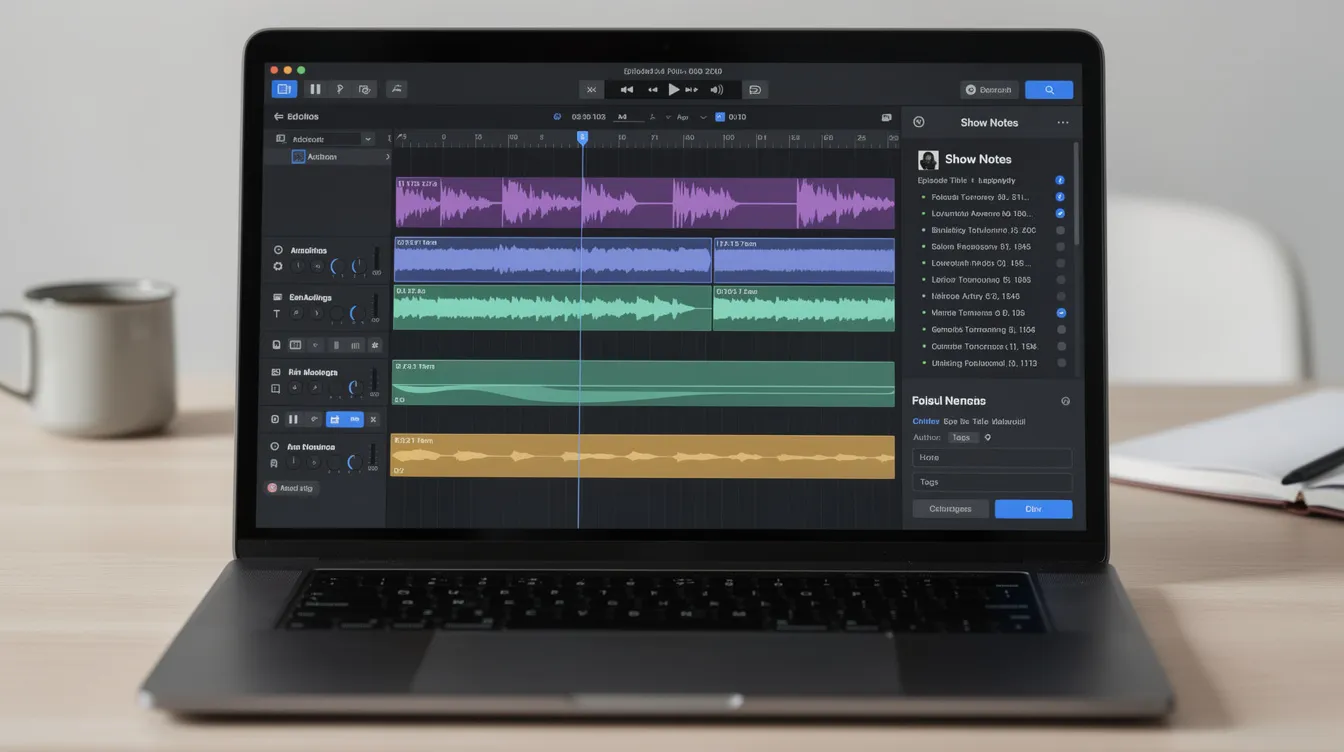
Episode-publishing checklist:
Title with clear topic, guest name, and benefit (under 60 characters)
Episode number and season number (if applicable)
Description with summary, bullet-point takeaways, and guest bio
Timestamps or chapters for episodes longer than 20 minutes
Outbound links to resources, plus a call-to-action (e.g., "request a consultation")
Correct category tags, language setting, and explicit content flag
Transcript uploaded or linked (edit auto-generated drafts for accuracy and brand voice)
Audio or video file uploaded in accepted format, scheduled for the correct date and time
Analytics, IAB Certification, and Measuring Business Impact
Many distribution services provide detailed analytics about downloads and listener demographics, making measurement a core part of the podcasting workflow rather than an afterthought. For business shows, vanity metrics are not enough - you need data that stakeholders and sponsors can trust.
Captivate's podcast analytics are IAB Tech Lab 2.2 certified, meaning downloads are counted using standardized methods that filter bots and non-human traffic. Captivate offers advanced analytics included in all plans, and allows easy import of complete podcast analytics history if you are migrating from another host. Buzzsprout provides advanced podcast statistics for tracking growth across episodes and campaigns.
Metrics that matter for business podcasts:
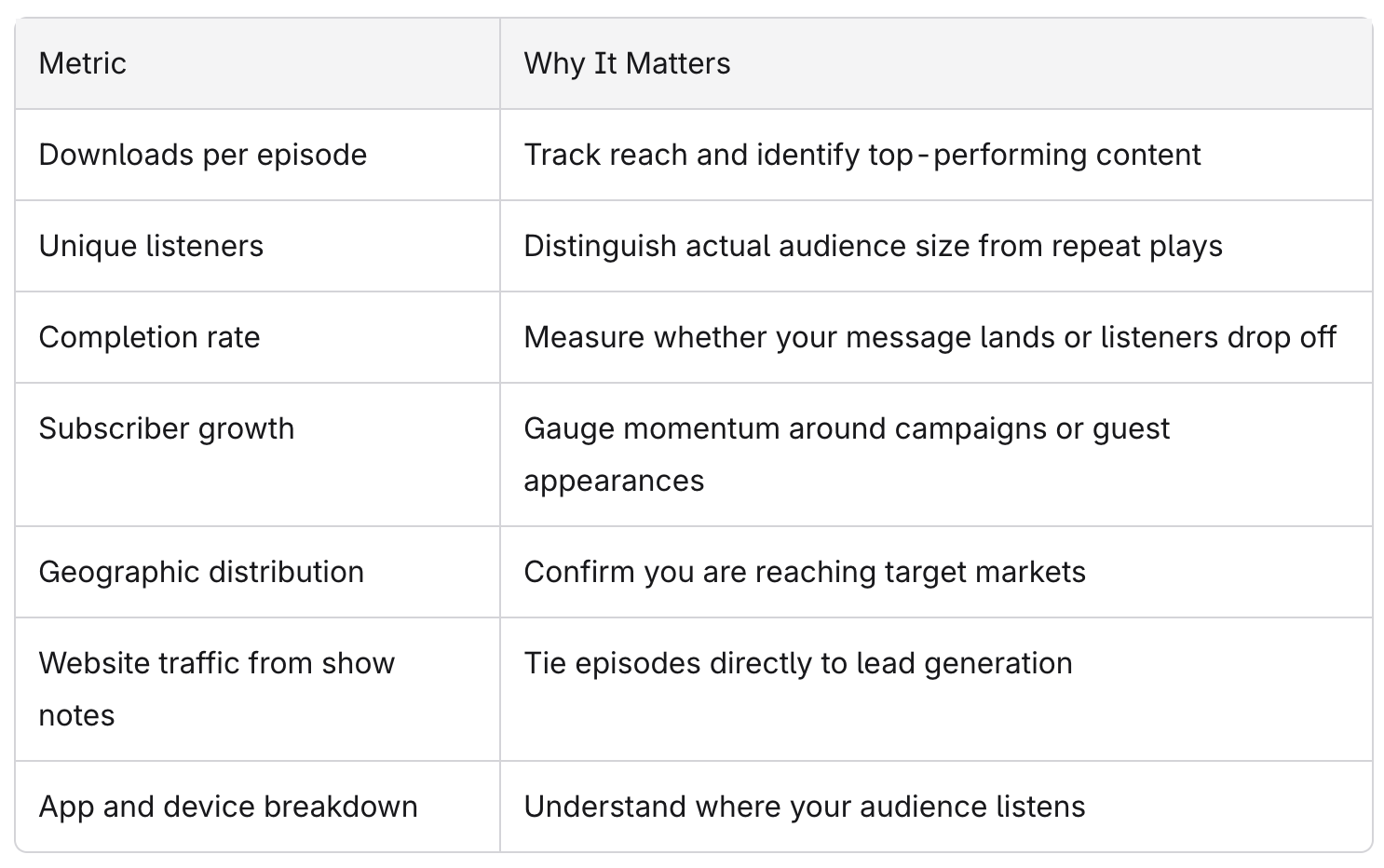
A monthly report should compare these metrics against prior periods, highlight top episodes, flag underperformers, and recommend adjustments to content strategy and guest selection. Ensure your platform exports data to tools like HubSpot, Salesforce, or Google Analytics so your team can track podcast impact alongside the rest of your marketing.
Choosing the Right Hosting Platforms and Distribution Support for Your Business
Selecting the best podcast hosting platform for your business comes down to matching features to your specific scenario. A SaaS company planning multiple podcasts across product lines needs a host that supports separate feeds, different access levels, and team collaboration. A financial services firm needs compliance-friendly workflows and possibly private feeds for internal communication.
Dynamic ad solutions help monetize podcasts effectively, making dynamic content insertion an important feature for shows planning sponsorship revenue. If video is part of your plan, confirm the platform handles video uploads and cross-posts to your YouTube channel.
Criteria mapped to real scenarios:
Reliability and uptime - non-negotiable for campaign-aligned publishing
IAB certified analytics - required for sponsor conversations and board reporting
Responsive support team - critical when a broken feed threatens a launch day
Integrations with your marketing stack - saves time for creators and marketing teams
Private feed options - for internal podcasts, board updates, or gated content
Scalability - room to create spin-off shows, add languages, or expand into new regions
The trade-off between feature-rich platforms and streamlined, service-oriented setups is worth considering. Some podcasters prefer a great service where a dedicated team handles complexity on their behalf. Others want direct access to every tool and prefer to manage the project themselves.

Next Steps: Requesting a Qualified Consultation or Service Inquiry
Getting published correctly delivers a stable presence across Apple Podcasts, Spotify, YouTube, and every major app your audience uses. It means reliable analytics, polished metadata, and episode workflows that marketing leadership can trust. It is the foundation of every successful podcast that generates measurable business results.
You do not need to master RSS specs, image encoding, or directory submission quirks. You need a clear plan and a partner to implement it.
A typical consultation includes:
Audit of your current or planned RSS feed and hosting setup
Review of artwork, metadata, and directory coverage
Check for IAB certified analytics readiness
Roadmap for improving your launch or ongoing distribution strategy
Whether you are planning a new show or fixing a fun but disorganized existing one, the right help makes the difference between a podcast that sits idle and one that drives real community engagement and pipeline.
Request a qualified consultation today to review your podcast distribution setup and get a clear path to publishing correctly.
Ready to launch your business podcast with confidence? Contact us today for expert podcast distribution services and podcast launch services tailored to your needs. Let’s get your show published correctly and heard by your ideal audience. Request a qualified consultation now and take the first step toward podcast success!
