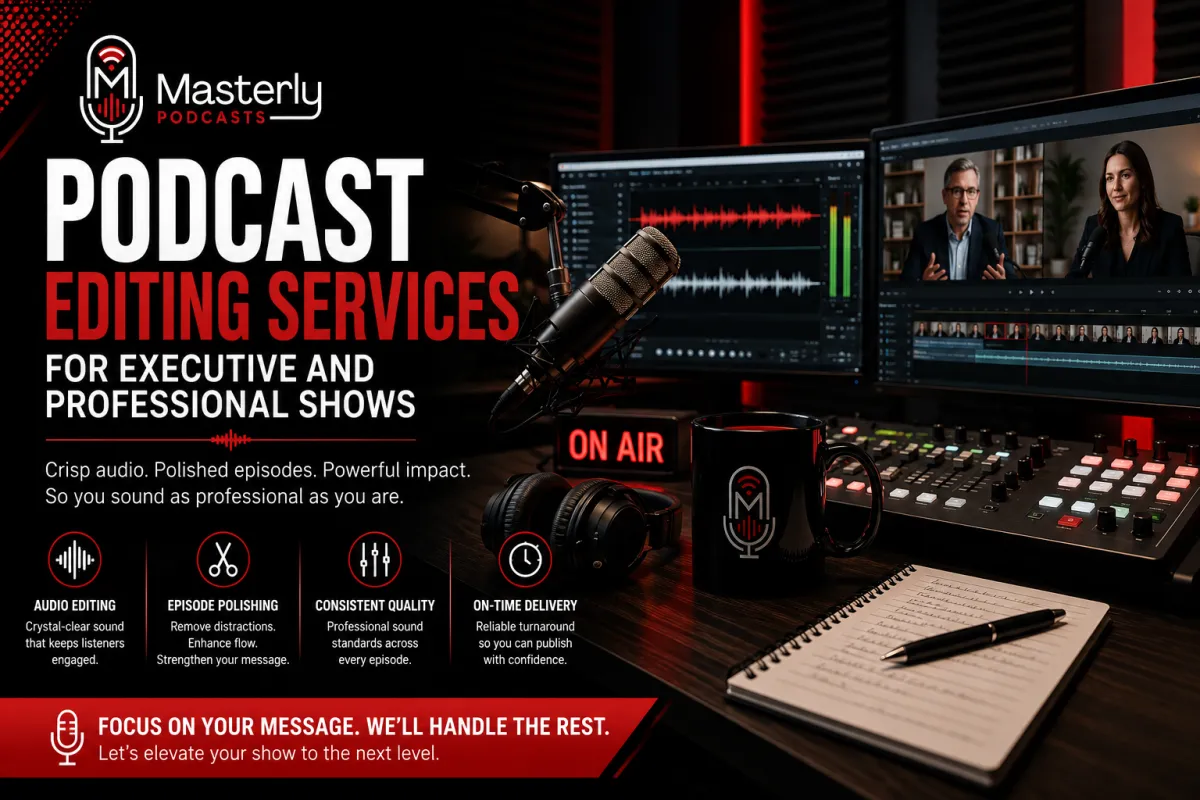
Podcast Editing Services for Executive and Professional Shows
For executives, firms, and organizations that already have recorded episodes, the gap between raw recordings and a polished, publish-ready show is where podcast editing services make all the difference. This guide walks through what professional post-production involves, how the process works, and how to decide whether outsourcing is the right move for your show.
Podcast editing services: what they are and why executives use them
Podcast editing services transform raw recordings from executives, firms, coaches, and organizations into polished, boardroom-ready episodes. These professional podcast audio editing services take CEO interviews, keynote speeches, and client conversations and refine them into clear, concise content that reflects your brand's professionalism.
For busy professionals, outsourcing podcast editing saves valuable time, ensures consistent sound quality, maintains brand-safe messaging, and reduces the risk of publishing errors. Almost 20% of podcasters hire professional editors for post production, and among executive and branded shows that number skews even higher. Delegating to a specialist podcast editor or agency delivers superior results and frees you to focus on your core work. Editing improves audio quality and listener engagement significantly, which is why most podcasters producing high quality podcasts eventually move beyond self-editing.
Core podcast editing techniques include noise reduction, speech cleanup, episode mastering, consistent loudness, and publishing workflow support. To experience these benefits firsthand and elevate your executive podcast, consider partnering with Masterly Podcasts, a trusted leader in professional podcast editing.
The following sections explain what professional podcast editing services include, how they work, and how to decide if outsourcing is right for you.
What professional podcast editing includes (audio and video)
Professional podcast editing services cover the full post production process from the moment you upload your raw audio (WAV) or video files (MP4) to delivery of publish-ready assets. Editors perform content edits to remove tangents and tighten structure, technical audio editing such as cutting and crossfades, noise reduction, equalization (EQ), compression, episode mastering, and export audio files optimized for hosting platforms. Many services offer both audio and video podcast editing capabilities, so your podcast content can reach audiences on Apple Podcasts, YouTube, and LinkedIn simultaneously.
As many executive shows now prioritize video content, services often include trimming video, basic color correction, and adding branded overlays or split-screen layouts for platforms where video podcasts perform well. Cover art consultation and sound effects integration are common add-ons. However, guest booking, full PR campaigns, or ad sales are generally outside the scope.
Basic editing services may only remove mistakes and normalize audio, while premium tiers add sound design, background music beds, show notes that summarize key takeaways and timestamps for episodes, and transcription services that convert audio to text for accessibility and SEO purposes. Understanding these tiers helps you match your needs to the right service level.
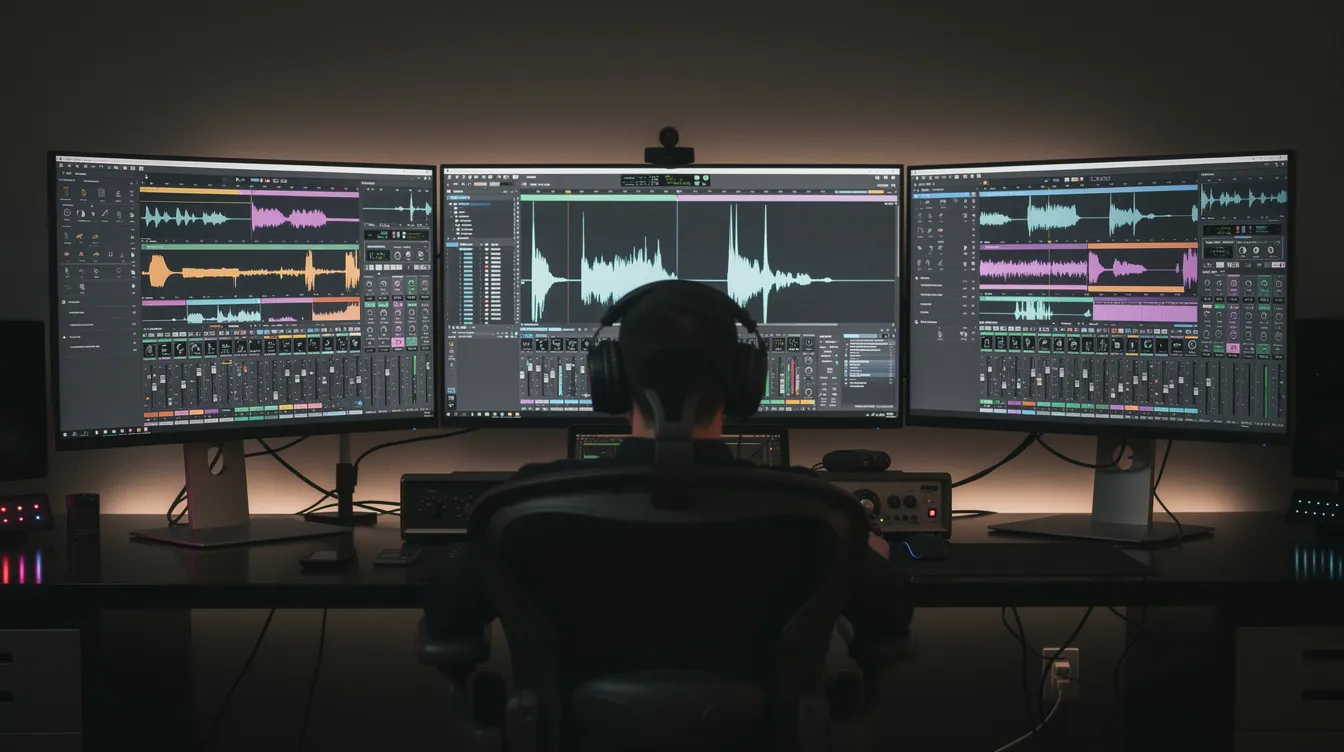
A typical episode lifecycle involves receiving source material including audio and video files, editing for content and technical quality, applying noise reduction and mastering, and exporting final files ready for upload. This comprehensive approach ensures your podcast episodes meet the highest standards of professionalism and consistency.
Included services typically are:
Content editing and structure tightening
Technical audio editing (cuts, fades, crossfades)
Noise reduction and audio cleanup
Equalization and dynamic compression
Episode mastering and loudness normalization
Video trimming and basic color correction
Branded overlays and split-screen layouts for video podcasts
Exporting platform-ready audio and video files
Key elements of high-end podcast audio editing
Under the hood, professional podcast editing for executives goes beyond basic cut-and-splice. It shapes tone, pacing, and clarity to create engaging, polished episodes. Audio editors remove background noise and hum, edit out mistakes and long pauses, smooth ums and filler words without sounding robotic, and tighten introductions and conclusions. Editing software can remove filler words like "ums" and "ahs" automatically, but a skilled editor knows when to leave a natural breath for authenticity. The goal is simple: editing should make your podcast easier to listen to and keep listeners engaged throughout.
Effective podcast editors ensure audio quality without excessive processing. Over-compression, for example, can make audio sound flat and fatiguing, stripping the voice of its natural dynamics. Equalization clarifies voices by balancing frequencies, compression balances dynamic range, de-essing tames harsh consonants, and limiting ensures consistent loudness. Podcasts should target -16 LUFS for stereo audio loudness, which prevents listeners from adjusting volume levels mid-episode during commutes or workouts.
Editing can also improve storytelling by condensing material, removing tangents that dilute your story, and tightening the narrative arc of each episode. For solo episodes or multi-guest interviews alike, this editorial judgment separates a forgettable recording from a compelling listen.
High-end editors monitor on professional headphones and speakers to ensure mixes translate well to laptops, car stereos, and earbuds - devices common for executive audiences. This attention to detail guarantees your podcast will sound natural and professional across all listening environments, so your audience can hear every word clearly.
Noise reduction, background sound, and audio clean-up
Even experienced executives often record audio in less-than-ideal environments like offices, conference rooms, or hotel suites, where HVAC systems, traffic, and laptop fans introduce background noise. Good audio quality requires decent recording equipment and environment, but even imperfect initial recording conditions can be improved significantly in post processing.
Noise reduction is a specialized part of podcast audio editing that identifies consistent noise profiles - such as air conditioners or computer hum - and reduces them without compromising speech clarity. Noise reduction tools can clean up background sounds effectively, and they can enhance recordings from noisy environments when applied with care. Professional tools designed to remove background noise use spectral analysis to isolate and attenuate unwanted frequencies while preserving the speaker's voice.
However, sudden noises like door slams, phone rings, or overlapping crosstalk can be challenging to remove perfectly, underscoring the importance of good recording practices. Professional editors use gentle settings, multiple passes, and careful listening rather than heavy-handed "one-click" fixes, which can produce metallic or underwater artifacts.
A small amount of subtle room tone is often retained between edits to keep conversations sounding natural rather than sterile, preserving the organic feel of your podcast. This balance between cleanup and authenticity is where technical knowledge and editorial ear meet.
Podcast mastering: making every episode sound consistent
Podcast mastering is the final stage where all elements - hosts, guests, theme music, ads - are balanced and prepared for distribution. Professional editing can include audio processing and mastering as a unified workflow. The goal is consistent loudness across episodes, stable tone between segments, and a professional "glue" that makes a season feel cohesive rather than a collection of disconnected recordings.
Unlike editing, which rearranges and removes content, mastering polishes and standardizes the entire final mix. Tasks include final EQ adjustments, multi-band compression for dialogue, limiting to prevent clipping, stereo image control, and exporting to correct sample rates and bitrates (e.g., 44.1 kHz, 96–128 kbps for speech-focused shows). Editors aim for -16 LUFS loudness for stereo podcast files, ensuring volume levels remain predictable across platforms and playback devices.
Executive podcasts often feature multiple hosts or recurring guests recorded via remote recording on different microphones; mastering helps unify these disparate sources so they sound as if recorded in the same "audio space." Think of mastering as the final polish before stepping on stage - it ensures your podcast sounds its best to your audience, whether they listen on earbuds during a morning run or through a conference room speaker.
Popular podcast editing software used by professionals
High-end podcast editing services rely on professional-grade editing software, but the real value lies in the editor's expertise, not the tool alone. Classic digital audio workstations (DAWs) like Adobe Audition - recommended for advanced podcast editing - and Pro Tools are staples in studios for their advanced features in multi-track mixing and spectral editing. Reaper offers deep customization for power users who build custom scripts and workflow macros.
Audacity is used by almost 25% of podcasters, making it one of the most accessible entry points, though it lacks some of the non-destructive editing and advanced features found in premium DAWs. Hindenburg Pro is designed specifically for spoken-word audio, making it a strong choice for interview and narrative podcast formats. Among text-based tools, Descript and Adobe Podcast allow editors to edit audio by deleting text from a transcript, streamlining content passes. Alitu offers text-based editing features for podcasts as well, catering to creators who prefer a simplified interface. Riverside offers automatic transcriptions in over 100 languages, which supports global shows and accessibility.
Many agencies use hybrid workflows combining DAWs for detailed editing and AI-assisted tools for filler-word detection and automated noise reduction. Executive clients benefit from receiving clean, edited audio without needing to learn or own this software themselves.
If you prefer minimal in-house editing, look for the best podcast editing software with reliability, non-destructive editing, strong noise reduction, and easy export presets for major platforms. Still, outsourcing to a professional podcast editor like Masterly Podcasts often saves time and ensures consistent, high-quality results.
Who benefits most from professional podcast editing services?
Professional podcast editing services are ideal for C-suite executives, consulting firms, B2B SaaS companies, financial advisors, law firms, executive coaches, higher education institutions, and nonprofits leveraging podcasts for thought leadership. Beyond these groups, podcast editing services can assist independent creators and businesses looking to elevate their podcast content without building an internal production team.
Common use cases include leadership shows, client education series, internal communications podcasts, event recaps, and interview series with industry experts. These groups often face challenges like overloaded marketing teams, inconsistent audio quality, missed deadlines, and the opportunity cost of executives editing their own podcast episodes. DIY editing of an hour-long episode can consume four to eight hours of executive or staff time - hours better spent on strategy, clients, or revenue-generating work.
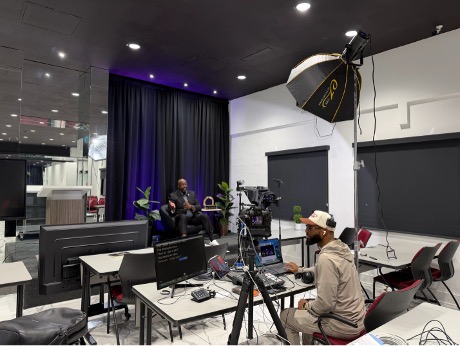
For example, a financial firm producing quarterly market commentary may require a 48–72 hour turnaround with compliance review integrated into the publishing workflow. Professional editing services become cost-effective when shows run regularly (weekly or bi-monthly) and brand perception, accuracy, and time savings are priorities.
Roles benefiting include:
Chief Marketing Officers (CMOs) seeking consistent, branded audio
Heads of People managing internal communications podcasts
Executive coaches wanting polished client-facing content
Compliance officers requiring precise editing and review workflows
Podcast engineers and producers managing multi-show portfolios
How a professional podcast editing workflow typically works
From a client's perspective, the professional podcast editing workflow begins with recording guidance to optimize source material. Editing starts before recording to minimize later edits - this means your editor or agency provides advice on mic technique, room treatment, and how to record audio for the cleanest possible individual tracks, especially when capturing remote recording sessions with guests.
Clients then deliver audio files and video files via shared drives or project platforms. Editors perform content and technical edits, followed by an internal quality check. Clients receive a review round to provide feedback. After final episode mastering, files are uploaded and scheduled using the client's hosting platform (e.g., Apple Podcasts or Spotify). Podcast editing services provide turnarounds typically within a few days - standard episodes usually land in 2–5 business days, with rush options available for time-sensitive content.
Show templates, intro/outro assets, and loudness/branding guidelines are stored to ensure episode consistency, even when multiple editors contribute. Revision loops are managed with clear deadlines and version naming to maintain workflow clarity and keep releases on track. Show notes are prepared alongside final audio, summarizing key discussion points and timestamps.
This structured process ensures working with an external podcast editor like Masterly Podcasts is predictable, efficient, and low-friction.
How to choose the right podcast editing partner
Executives and communications teams should evaluate podcast editing services based on several critical criteria. Audio quality is a critical factor when selecting a podcast editing service - without it, nothing else matters.
Request recent, unbranded before-and-after clips to assess improvements in noise reduction, pacing, and mastering. Communication with an editor can impact the quality and consistency of editing, so pay attention to responsiveness during initial conversations. A dedicated editor may provide a better experience than a rotating team, since familiarity with your voice, brand, and preferences compounds over time.
Key consultation questions to ask:
How do you handle tight deadlines and rush delivery?
How many revisions are included, and how are they outlined?
Who owns the project files and master recordings?
What confidentiality protections are in place for sensitive content?
Do you support both audio and video formats for top podcasts?
Revisions should be included in the service and clearly outlined before you sign any agreement. Some services offer free trials for first-time users, which is an excellent way to evaluate fit before committing to a longer engagement.
Alignment on the publishing workflow - who uploads, writes titles and descriptions, and presses "publish" - is essential to avoid last-minute confusion. Choose a partner who offers guidance on episode structure, series planning, and maintaining a consistent executive voice. Masterly Podcasts invites you to experience professional, reliable editing tailored to your needs.

Next steps: when to outsource and how to request a podcast editing consultation
If you have recorded episodes or plan to, value quality, and lack internal bandwidth or expertise, it's time to consider outsourcing. Ideal timing is once your show concept is clear and a few episodes are recorded or scheduled, or when internal teams miss deadlines due to editing workload.
Before consultation, prepare:
Example recordings or raw audio samples
Desired release frequency (e.g., weekly, bi-monthly)
Target platforms and audience demographics
Brand guidelines and approval requirements
A typical consultation includes an audio quality assessment, recording improvement recommendations, a proposed editing and publishing workflow, and a custom service estimate. This initial conversation helps both sides determine scope, timeline, and fit.
To elevate your executive podcast with expert post production, request a podcast editing consultation with Masterly Podcasts today. Contact us at (404) 726-7261 or visit https://masterlypodcasts.com/ to get started.
