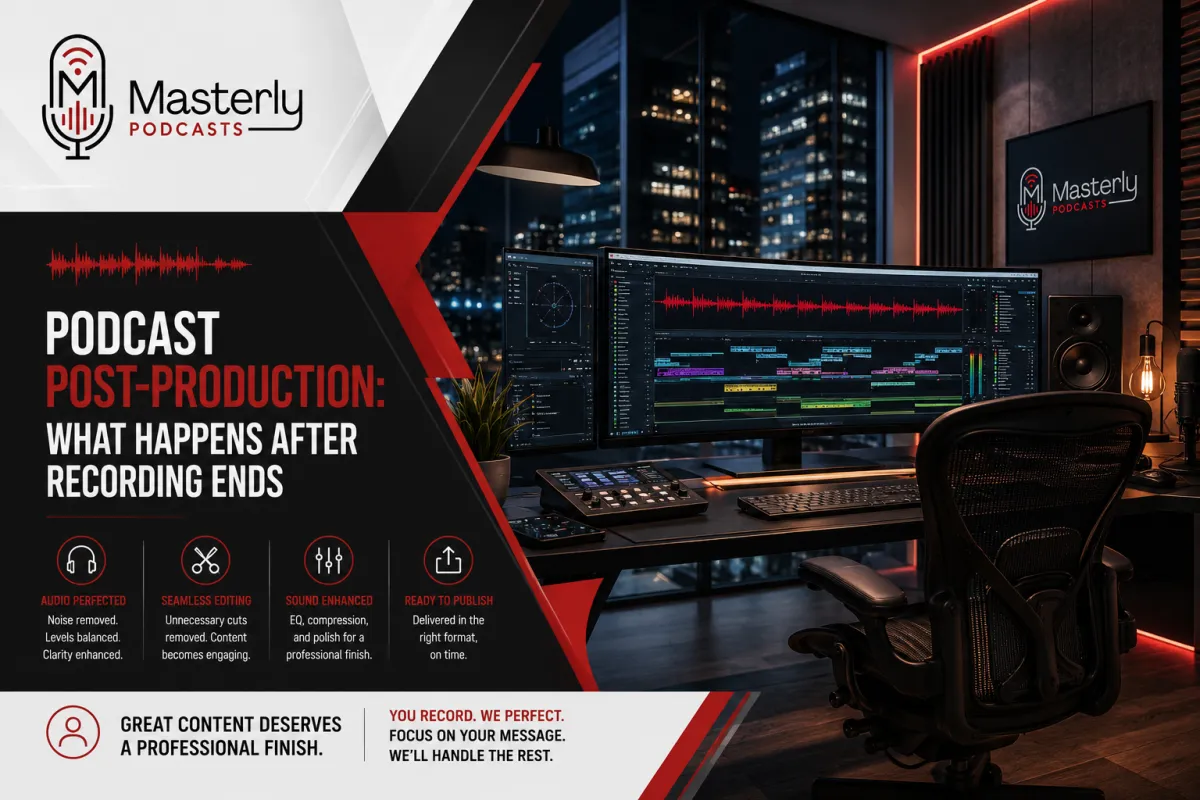
Podcast Post-Production: What Happens After Recording Ends
The moment you stop recording, a different kind of work begins. Here is what podcast post production actually involves and why it shapes everything your audience will hear.
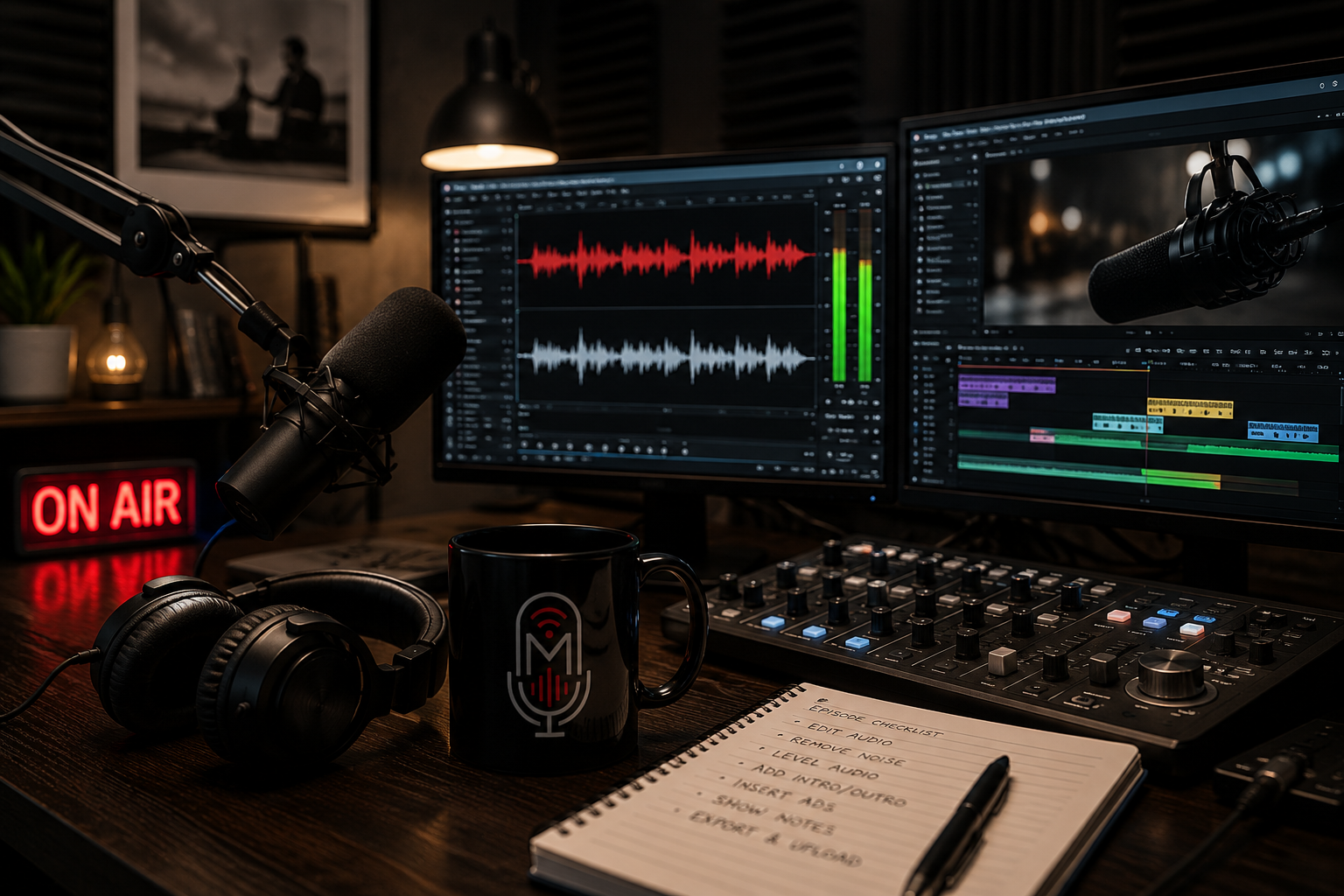
What Is Podcast Post-Production (and Why It Matters Right After You Hit Stop)
Podcast post-production covers everything that happens to your audio and video files between the moment you stop recording and the moment a finished podcast episode goes live on platforms like Apple Podcasts and Spotify. It includes audio editing, video edit work, sound design, quality control, and packaging such as show notes, metadata, artwork, and magic clips for social promotion.
Podcast post-production involves refining raw audio into a polished episode. Consider the difference: a raw 45-minute interview recording often becomes a focused, polished 32-minute episode after post production. That gap represents removed tangents, tightened pacing, balanced levels, and intentional story structure. Without it, listeners hear every stumble, every background noise spike, and every moment of dead air.
This article is written for podcasters and organizations evaluating done-for-you podcast post-production services, not hobbyist creators looking for free templates. As a professional post-production partner, Masterly Podcast helps qualified teams turn recordings into on-brand media. A "Request a post-production assessment" CTA appears at the end for teams ready to take the next step.
Podcast editing improves audio and video quality. When done well, the concrete benefits include:
Clarity - removal of distractions, background noise, and filler words so every voice is intelligible
Consistency - episode-to-episode uniformity in levels, structure, and branding
Brand alignment - audio and visual identity that matches your organization's standards
Listener retention - tighter pacing keeps listeners engaged and completing episodes
Discoverability - professional metadata, SEO-friendly show notes, and polished production earn reviews, shares, and algorithmic favor
Listeners prefer high-quality audio over poor-quality content, and effective editing makes a podcast more memorable and engaging.
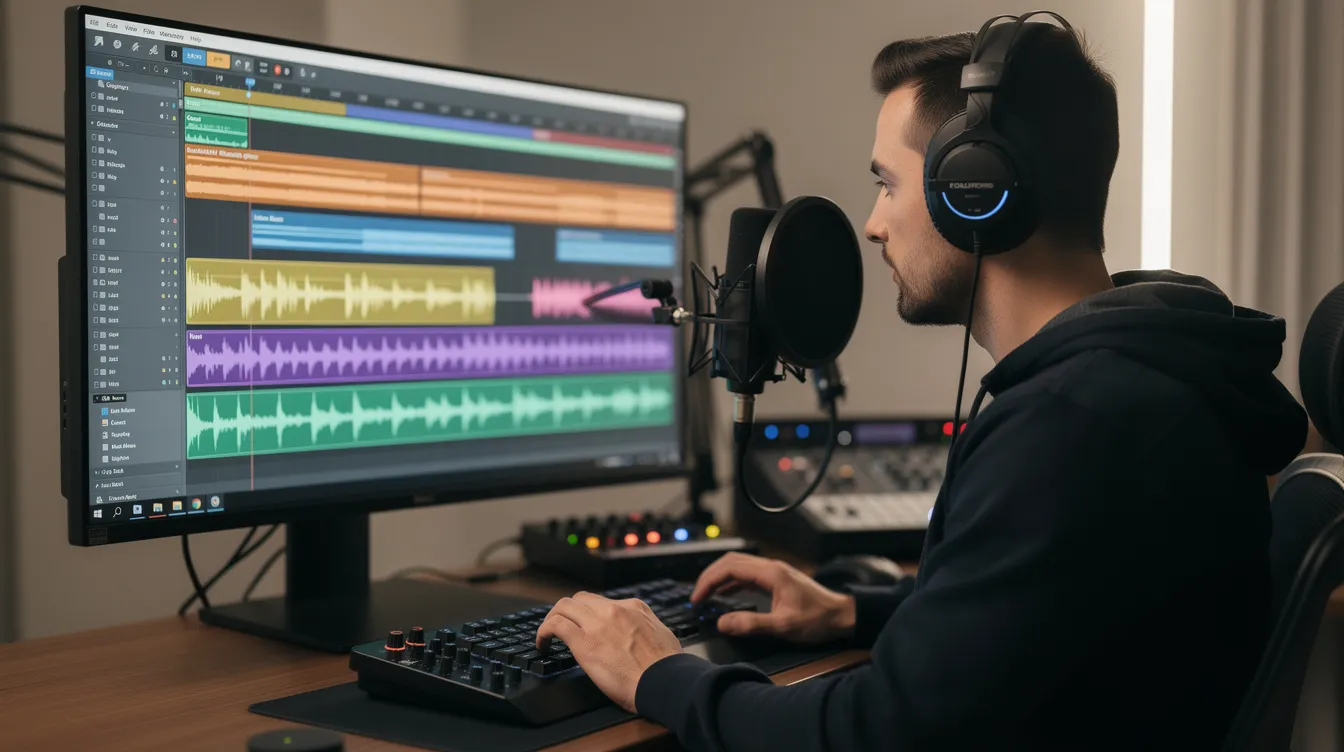
The End-to-End Podcast Production Workflow: From Recording to Release
Every podcast follows the same general production workflow, whether it is a solo teaching show or a multi-guest roundtable:
Pre-Production → Recording → Post-Production → Distribution → Performance Review
Post production begins the moment raw audio files and video files leave the recording session and ends when all final assets are ready for publishing across YouTube, Apple Podcasts, your website, and your email list. Common handoff points include remote recording sessions from Zoom or Riverside, in-studio multitrack sessions, or on-location shoots delivered through Google Drive, Dropbox, or a project management tool like Notion or Asana.
A professional podcast production workflow reduces turnaround time. Teams recording weekly or twice-weekly shows can expect consistent 3–5 business day cycles when the process is structured properly, preventing the bottlenecks that cause missed publish dates.
Here is how we structure a typical workflow. Each stage below gets its own section in this article:
Ingest and organization - receive, verify, and organize all files
Structural and content editing - decide what stays, what goes, and in what order
Audio editing, processing, and mix - make every voice broadcast-ready
Video edit and promotional clips - extend reach across platforms
Quality control - protect your brand before you hit publish
Show notes, metadata, and publishing assets - help episodes get found
Additional features and analytics feedback loop - monitor performance and refine
Ingest and Organization: Turning Raw Recordings into a Structured Project
Before any editing begins, raw audio and video tracks need to be received, verified, and organized. This step prevents confusion that compounds across dozens of episodes.
Receive files - collect host track, guest track, backup recordings, intro and outro music, sponsor reads, ad markers, and any B-roll or screen captures for video podcasts
File naming and folder structure - use consistent conventions such as 2026-08-01_Ep47_GuestName/Audio/Video/Assets, with subfolders for raw and edited files
Tool integration - cloud storage platforms like Google Drive or Dropbox connect to editing software like Adobe Audition or Premiere Pro; review tools like Frame.io handle video approvals
Asset verification checklist - confirm all tracks are present, recording quality is acceptable (no severe clipping or missing channels), guest names are spelled correctly, and segment timestamps are included
Production notes review - editors review notes from the host or producer covering segments to cut, sensitive sections to handle carefully, and specific sound design requests
When teams plan to add multiple files from different contributors or device sources, a structured ingest process keeps everything manageable from episode one through episode one hundred.
Structural and Content Editing: Shaping the Listener Experience
Structural editing is about shaping the listen before touching a single EQ knob. It answers: what stays, what goes, and in what order?
A clear narrative structure is important for maintaining listener attention. Editing helps create a cohesive story for listeners by removing the noise that clutters a conversation. A raw 60-minute interview might become a tight 40–45 minute episode after this pass.
Editing removes distractions and improves pacing to keep listeners engaged. Here is how editors typically approach this stage:
Listen through with producer notes - mark sections to keep, cut, or move
Remove false starts and mistakes - delete repeated questions, dead air, and off-topic tangents
Restructure for impact - move a powerful story or quote earlier to create a hook; ensure logical flow between segments
Pace optimization - shorten overly long responses, balance segment lengths, trim pauses that stall momentum
Speech editing - selectively reduce filler words ("um," "like," "you know") and minimize confusing cross-talk while preserving natural cadence and personality
Content compliance - flag or remove legally sensitive statements, check factual claims, and handle embargoed material
Format alignment - confirm the edit matches the show's format (narrative, interview, roundtable, solo) and recurring structure (intro, segments, sign-off, sponsor placement)
Editing helps create precise storytelling for easier listener follow. This is where the episode's cohesive story takes shape, well before mastering or mixing begins.
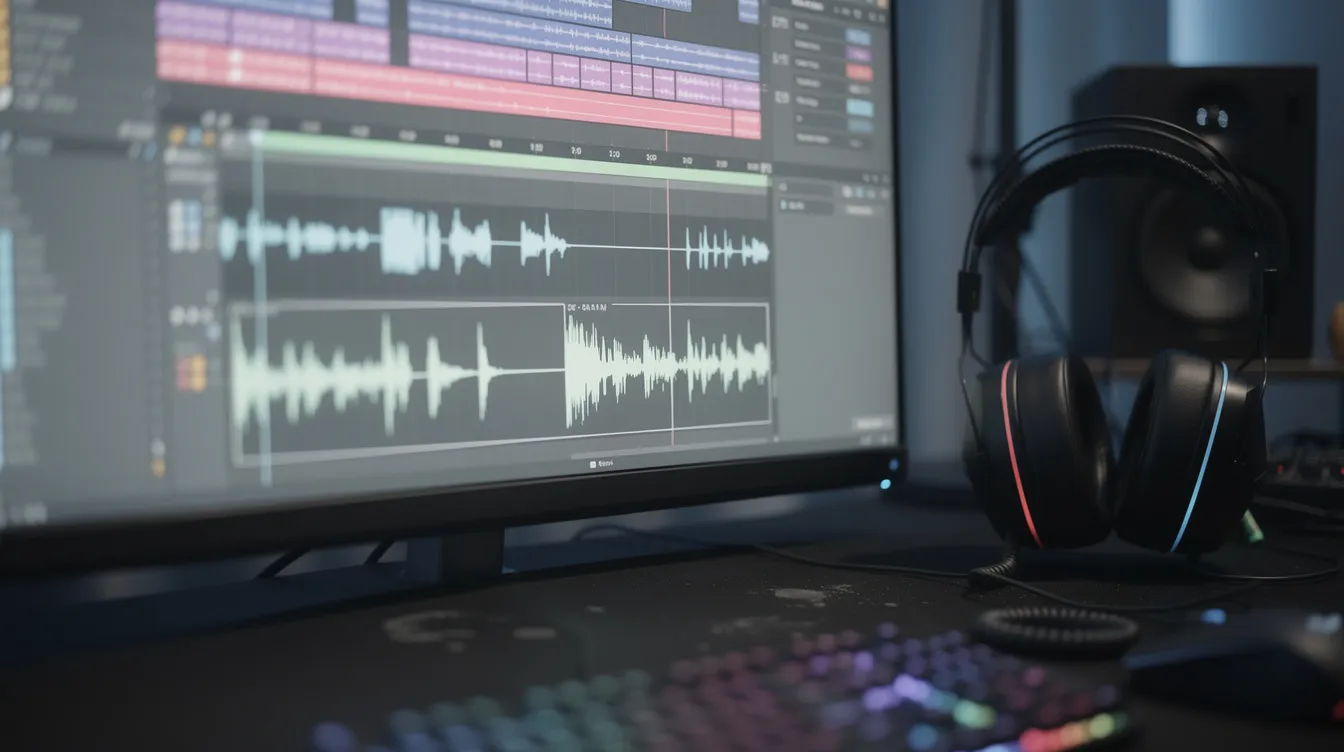
Audio Editing, Processing, and Mix: Making Every Voice Sound Broadcast-Ready
Audio editing means cutting and rearranging content. Audio processing means improving sound quality using signal-processing tools within the overall audio mix. Both happen here.
Post-production includes editing out mistakes and normalizing audio volume. A typical mix chain for spoken-word podcasts follows this order:
High-pass filter (80–100 Hz) to remove low-frequency rumble
Noise reduction - noise reduction minimizes background noise like hiss or hum; tools like iZotope RX handle spectral cleanup, and a noise gate can tame intermittent sounds
EQ - EQ adjusts frequency balance to enhance voice clarity, cutting mud and boosting presence
Compression - compression equalizes audio levels for a consistent listening experience, typically at a 3:1 to 4:1 ratio with gentle attack and release
De-essing - tames harsh sibilance ("s" and "sh" sounds) to reduce fatigue
Limiter - prevents peaks from exceeding the true peak ceiling (usually −1 dBTP)
Loudness normalization - mastering sets audio loudness to industry standards for podcasting, targeting −16 LUFS for stereo or −19 LUFS for mono
Audio processing removes background noise and interference from sources like echo in a conference room, inconsistent mic distance from a remote recording session, keyboard clicks, notification sounds, or HVAC hum. Podcast engineers use tools like Adobe Audition, iZotope RX, and Hindenburg to repair and enhance dialogue, though the technical knowledge required is significant.
Adding music and sound effects enhances the mood of a podcast episode. When intros, outros, sponsor segments, and stingers are layered in, music beds are typically ducked to −18 to −20 dB FS under the speaking voice so speech stays intelligible. Adding sound effects can enhance listener engagement when used with intention rather than excess. Mastering blends different tracks for a polished final product.
A consistent audio mix across episodes strengthens brand identity and reduces listener fatigue, especially for professionals listening on earbuds, a phone speaker, or in a car. Podcast editing improves audio quality and listener engagement when the mix is reliable from episode to episode.
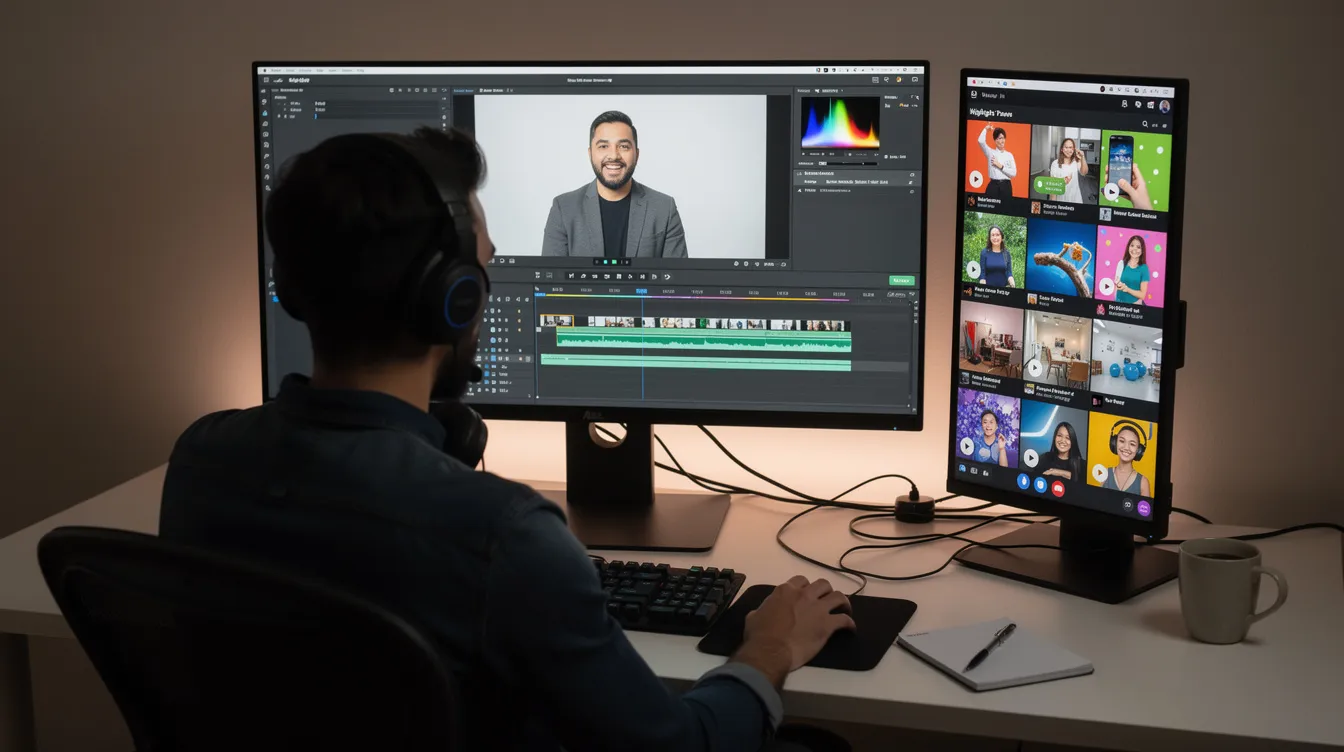
Video Edit for Video Podcasts and Reels: Extending the Reach of Each Recording
Many top podcasts now record video by default, turning a single session into both an audio podcast episode and a full video episode for YouTube or LinkedIn. This approach maximizes what you create every time you start recording.
The basic video editing workflow includes:
Sync and switch - align high-quality audio tracks with camera feeds and switch between speaker angles
Trim to match - cut video to match the final audio edit so nothing falls out of sync
Titles and graphics - add lower thirds, name titles, sponsor overlays, and simple motion graphics
Color correction - ensure consistent color grading across episodes to match the organization's visual identity
Captions and subtitles - improve accessibility and engage viewers scrolling without sound
Social-formatted outputs are now a standard part of professional post production. Editors create vertical clips (9:16) for TikTok, Instagram Reels, and YouTube Shorts, as well as square crops (1:1) for LinkedIn feeds. Magic clips - short, 30–90 second highlight segments selected from the main episode - serve as promotional assets across social channels. These can be manually chosen or identified using software that detects strong statements, laughter, or high-energy moments.
Maintaining brand consistency in fonts, color palette, logo placement, and motion style at this stage ensures the video output matches the organization's broader media presence.
Quality Control: Protecting Your Brand Before You Hit Publish
Quality control in podcast post production is a formal review process separate from the main editing pass. Final quality checks ensure consistency and accuracy before publishing.
Technical QC checks:
Audio levels meet loudness targets (e.g., −16 LUFS integrated, true peak ≤ −1 dBTP)
No glitches, dropouts, clipping, or distortion in the final file
Correct file format and specs (exporting a podcast typically involves MP3 or WAV format with a high bitrate, such as 128–320 kbps for MP3)
Ad breaks, sponsor reads, and music cues land in the correct positions
Fade-in and fade-out transitions are smooth
Content QC checks:
Guest names are pronounced correctly throughout
Sensitive, embargoed, or legally flagged content has been removed
Episode structure aligns with the show's style guide: intro script, sign-off language, and sound branding elements are consistent
A muted track, a missing sponsor read, or an accidental upload of an unedited version can damage credibility in ways that are difficult to recover from. For ongoing shows, QC also includes spot-checking against a style guide so listeners experience the same professional standard whether they download episode five or episode fifty. This level of control is one of the top reasons brands invest in professional workflows.
Show Notes, Metadata, and Publishing Assets: How Episodes Get Found
Creating show notes and transcripts improves accessibility and discoverability. Show notes serve as the written companion to each podcast episode, summarizing the conversation, listing key takeaways, and linking to resources, sponsors, and guest profiles.
Well-structured show notes support SEO on the open web, while metadata helps listeners find episodes inside podcast apps and directories. Here is a practical publishing checklist:
Titles - use clear, benefit-driven episode titles that front-load keywords (e.g., "Ep 27: How to Audit Your Podcast Production Workflow")
Descriptions - include a summary, guest credits, sponsor mentions, and timestamps; talk directly to the audience about what they will learn
Metadata tagging - metadata tagging includes essentials like episode title and artwork, plus consistent numbering and series tags
Chapter markers - using chapter markers lets listeners navigate to specific segments easily
Export and upload - export final audio and video in correct specs, apply cover art and episode images, upload to the hosting platform, and confirm distribution to Apple Podcasts, Spotify, Google Podcasts, and other directories
Transcripts and pull quotes - transcript files for accessibility, pull quotes for social media marketing, and embed codes for the brand's website or blog
These publishing assets turn a finished episode into a discoverable, shareable piece of media across every relevant channel and playback device.
Choosing Podcast Post-Production Services: When to Bring in the Pros
Quality editing can elevate a podcast from good to great. Here are the key signs a team is ready to move from DIY to professional podcast editing services:
Internal capacity is stretched and episodes ship late or inconsistently
Audio quality varies from episode to episode
Growth goals demand reliability: sponsorship conversations, multi-channel distribution, or corporate branding standards
The show needs video editing, social clips, show notes, and transcripts - a true one stop shop
When evaluating providers, Masterly Podcast stands out for its experience with diverse formats and industries, clear podcast production workflow, expert audio mix and video edit capabilities, fast turnaround times, and collaborative communication style. Our comprehensive approach ensures your podcast is consistently polished and on-brand, freeing you to focus on creating compelling content and building relationships with your audience.
The goal of working with Masterly Podcast is not just clean audio - it is a system that reliably turns recordings into on-brand content, week after week, so you can focus on the aspects of your show that only you can do: the stories, the conversations, and the relationships with your listeners.
Next Steps: Request a Post-Production Assessment
You now understand the stages of podcast post production - from ingest and structural editing through audio mix, video edit, quality control, and publishing. Each stage exists to turn what you record into something your audience will listen to, share, and remember.
If your team releases at least one episode per month and wants to grow or maintain a professional, long-term show, a post-production assessment with Masterly Podcast can clarify where your current workflow stands. During an assessment, you can expect a review of a recent episode, feedback on your audio mix and overall workflow, and specific recommendations for improvement.
This assessment is best suited for organizations, agencies, and brand teams that are serious about performance and ready to engage with a structured production process - not those looking for a one-time, low-cost fix.
Request a post-production assessment →
Contact Masterly Podcast at (404) 726-7261 or visit https://masterlypodcasts.com/ to take the next step toward elevating your podcast production workflow and delivering exceptional content to your audience.
