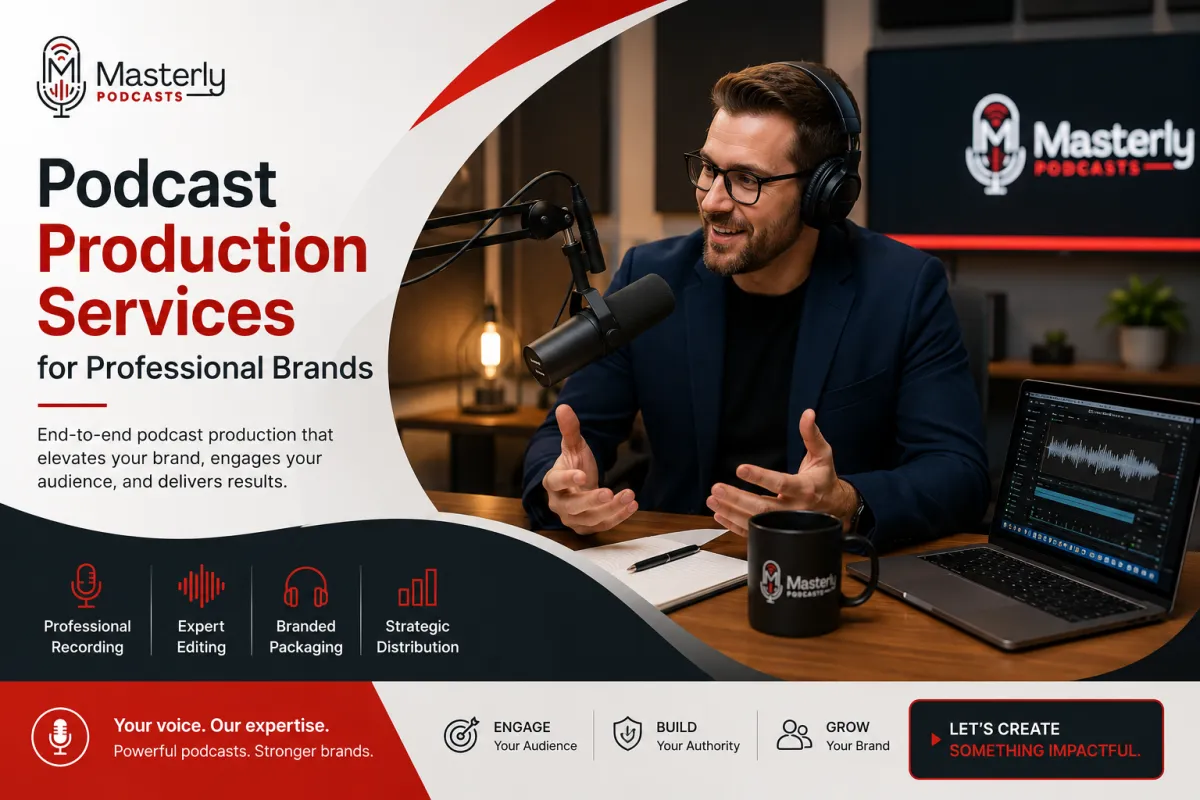
Podcast Production Services for Professional Brands
Podcast Production Services for Professional Brands
If you lead a business, a practice, or a personal brand, you already know that attention is the scarcest resource in your market. A well-produced podcast can earn that attention consistently. But most executives don't have time to learn audio engineering, manage an episode calendar, or chase guests. That's where podcast production services come in-and this guide breaks down exactly what they include, what risks exist without them, and how to decide if professional support is right for your team.
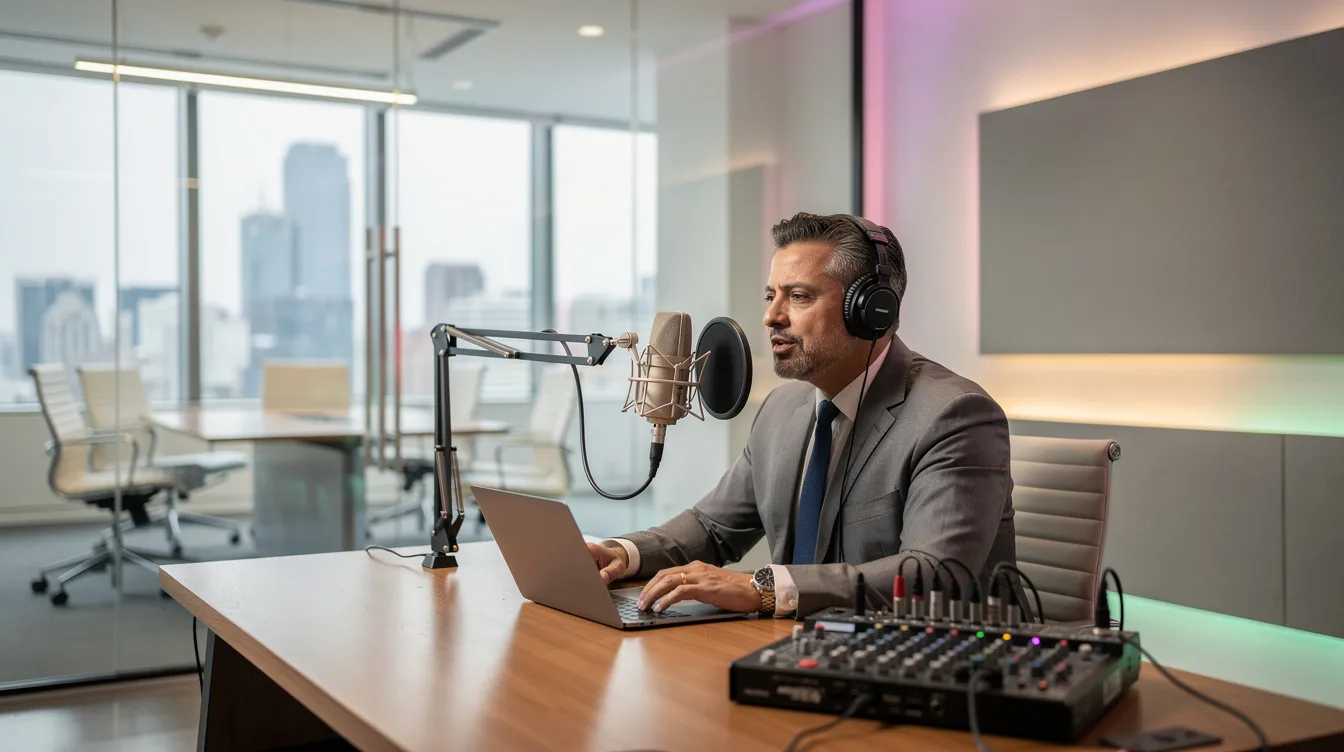
What "podcast production services" actually means for executives
Podcast production services cover the entire life cycle of a show: strategy, recording, editing, publishing, analytics, and ongoing optimization of podcast episodes. It is not just pressing record. It is a system designed to produce world class podcasts that serve a specific business objective over months or years.
A few terms get conflated, so here is a quick distinction. A podcast production company is the team that handles the work-from concept through promotion. A podcast host is the person on the mic, usually an executive, co founder, or subject-matter expert. A podcast hosting platform is the technical service that stores your audio file, generates your rss feed, and distributes your show to directories like Apple Podcasts Spotify, Amazon, and others. These are three different roles.
For professional brands in 2024–2026, common use cases include B2B thought leadership, internal communications for global teams, investor relations, and branded podcast series tied to product launches or events. Podcasts can lift brand awareness up to 30x higher than traditional media, and 55% of B2B decision makers listen to podcasts daily-making this channel difficult to ignore.
Masterly Podcast provides full service support from concept to publishing and promotion for executives, firms, coaches, authors, and organizations seeking end-to-end production. If you want to understand what that engagement looks like, read on-and consider scheduling a consultation once you've reviewed the details below.
Risks of DIY podcasting for professional brands
Launching a show internally sounds straightforward until reality sets in. Agencies provide specialized skills that in-house teams often lack, and without those capabilities, brands face four concrete risks.
Reputational risk. Poor audio quality, inconsistent sound levels, or sloppy editing sends the wrong signal about a premium brand. Podcast listeners notice immediately when production quality doesn't match the expertise being shared.
Operational risk. Internal teams underestimate the hard work involved in weekly production. Guest booking, editing, publishing, and promotion add up fast. Many DIY shows experience "podfade" after six to ten episodes when marketing staff can't keep up.
Strategic risk. Without clear positioning, a defined target audience, or success metrics, budget and executive time are wasted on a show that doesn't convert.
Technical risk. Misconfigured rss feeds, missing episode metadata, and hosting problems can make a show invisible on major directories.
Consider a realistic scenario: a 2025 B2B show managed in-house produced eight episodes, then stalled because the team couldn't sustain guest booking and editing alongside their existing responsibilities. The audience dropped off, and the brand lost credibility with subscribers who expected consistency.
Professional podcast production services act as risk mitigation-protecting both brand equity and executive calendars.

Core components of professional podcast production services
A production agency manages the entire podcast lifecycle from concept to distribution. Here is what a complete engagement covers:
Strategy. Audience research, show concept, episode formats, and alignment with business goals such as demand generation, recruiting, or partner enablement. A full-service agency handles strategy, production, and promotion under one roof.
Recording. Remote or studio setups, coaching for the host, and technical capture of clean audio across all episodes. Recording support assists with technical aspects like microphone setup and ensuring high-quality audio.
Editing. Removal of filler, tightening structure, sound design, intro/outro themes, and sonic branding. Full-service agencies handle strategy, recording, editing, and promotion as an integrated workflow.
Publishing. Setting up the hosting platform, managing rss feeds, writing show notes, crafting episode titles, and distribution to Apple Podcasts, Spotify, YouTube, and more.
Clips and repurposing. Short audio and video clips for LinkedIn, X, and newsletters that extend each episode's reach.
Analytics and optimization. Monitoring listener behavior, completion rates, and audience growth over time, then refining content and format based on data.
Some brands choose à la carte support for specific gaps-editing only, or clips and distribution-while others engage a podcast production agency for the full scope. Either model works, provided every core component is covered.
Strategy first: designing a branded podcast that serves your goals
Strategy is the single most important early decision. Without it, you end up recording conversations that sound fine but serve no one in particular. Strategic insight helps align the podcast with goals such as brand building or marketing, and it should happen before a single episode is recorded.
Pre-production involves developing the show concept, identifying the target audience, and outlining episode formats. Masterly Podcast works with leadership and marketing teams to clarify who the show is for, what problem it solves, and how it advances specific outcomes-whether that's 2026 pipeline targets, keynote support, or a book launch.
Key decisions made at this stage include:
Positioning the branded podcast against other shows in your niche so it earns a clear "why this, why now"
Show name, episode length (15–20 minute briefings versus 45–60 minute deep dives), and cadence (weekly, biweekly, or seasonal)
Single host, co-host, or rotating executive hosts
Concrete artifacts: an editorial calendar for the next 90–180 days, topic pillars, and guest criteria aligned with ideal customer profiles
Strong podcast strategy up front reduces rebrands, format changes, and costly relaunches after the first five to ten episodes. It is the difference between a great show and an expensive experiment.
From recording to publishing: what a full-service production workflow looks like
Here is what a typical episode looks like from start to finish when you work with a professional production company.
Pre-production. The podcast producer briefs the host, prepares interview outlines, and handles guest booking and confirmations. Technical checks confirm remote or studio recording quality. Podcast agencies manage guest sourcing and audience growth, and agencies handle guest coordination, saving time for your team.
Recording. A producer provides live direction, manages time, and captures clean tracks with backups. Even guests who have never done a podcast interview before are guided through the conversation so the podcasting experience feels natural.
Post-production. The team edits for clarity and pace, adds music and brand elements, and levels audio to broadcast standards. Post-production involves writing show notes, creating transcripts, and distributing audio and video files. Final approval loops keep the host in control without drowning in technical details. Technical stress is reduced by handling complex aspects of recording, editing, and distribution.
Publishing. The episode is uploaded to the podcast platform, tagged with search-friendly titles and descriptions, and scheduled for release across major listening apps and the brand's YouTube channel.
Consistency is achieved by managing production schedules for regular releases. Once a show is established, professional brands can expect seven to ten business days from recording to publication. Masterly Podcast keeps executive time focused mainly on recording and approvals-not on back-end logistics.
Nailing the sound: editing, sonic branding, and listener experience
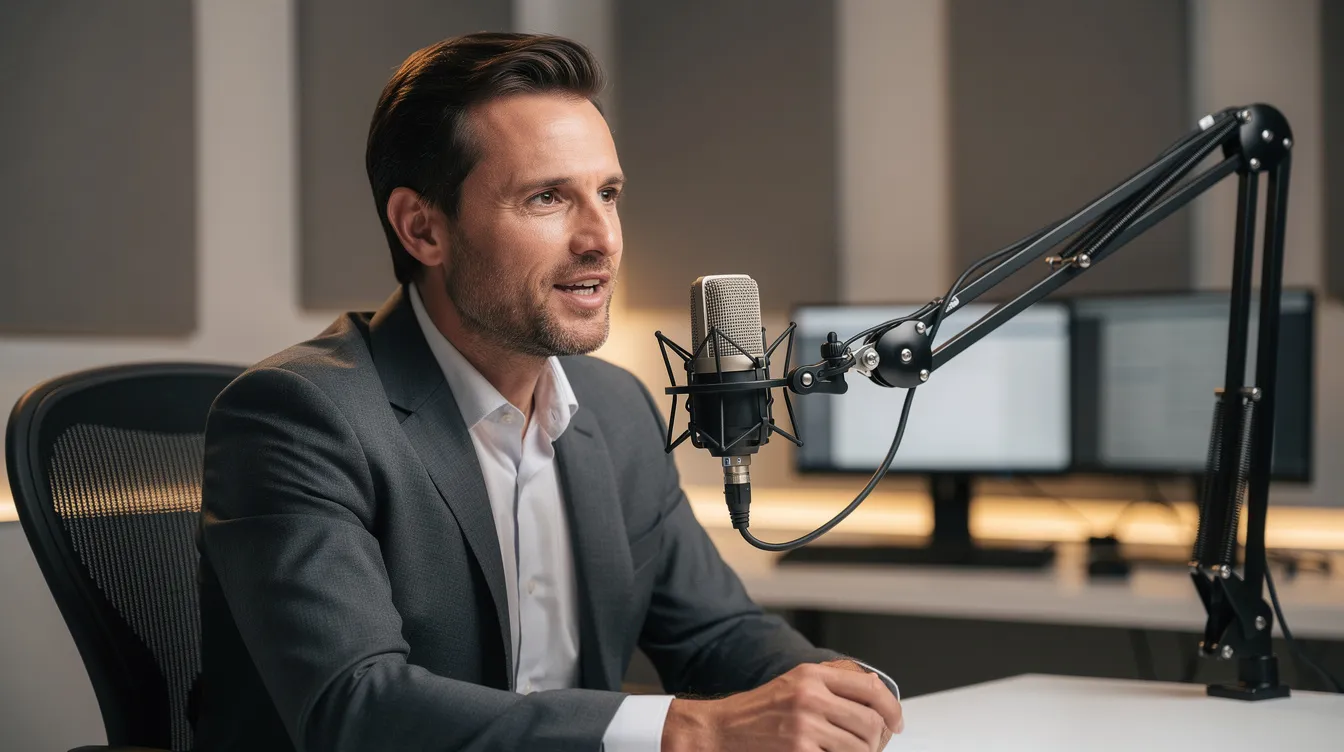
Professional editing removes distractions-ums, false starts, long pauses, and off-topic tangents-while preserving a natural, human tone. Professional quality ensures audio sounds polished and trustworthy to retain listeners, and that polish is what separates a successful podcast from background noise.
Sonic branding includes consistent intro/outro music, subtle stings, and soundscapes that match a brand's identity. A financial services firm requires a different audio feel than a creative agency. Podcast production services can assist with branding by designing artwork and intro music that reinforce recognition across every episode.
On the technical side, loudness normalization (targeting −16 LUFS for stereo) and consistent volume across episodes ensure compatibility with every major podcast player. Editing services can include audio post-production and show notes writing, creating a complete package for each release.
Accessibility matters too. Transcripts and captions for video content support both inclusion and SEO, helping new podcast listeners discover your show through search. A high-end listener experience increases completion rates and encourages recommendations among executives and decision-makers-the exact audience most professional brands want to reach.
Audience growth, distribution, and repurposing your podcast content
Simply uploading episodes to a hosting platform is not enough. Brands need intentional distribution and podcast marketing to turn production into measurable results. Hiring agencies can lead to a 10x return on investment when distribution is handled strategically.
Owned channels:
Embed episodes on your website and feature them in email newsletters
Share clips through leadership's LinkedIn profiles to extend reach
Social media assets support audience growth for podcasts across every platform
Earned and paid routes:
PR outreach around major episodes with industry leaders as guests
Guest cross-promotion where each guest shares the episode with their own audience
Selectively using paid sponsors or paid promotion to boost strategic episodes
Repurposing: Agencies should repurpose content into multiple formats. Content repurposing turns episodes into blogs and social media posts. Agencies can create video content from audio podcasts for YouTube. Content repurposing agencies create multiple content types from one episode-short video clips, quote cards, audiograms, and videos that fuel a week of social content and sales enablement.
Marketing and promotion creates cover art, manages social media snippets, and provides promotional materials. Marketing support may include creating social media clips, newsletters, and performance reporting. Regular release schedules are important for audience growth in podcasting-consistency builds subscriber trust.
A B2B podcast can generate six or seven figures per contract when distribution and relationships are managed well. Podcasts can generate over 5 million organic downloads for clients when production and promotion are integrated. Podcasts can increase brand awareness up to 30 times higher than traditional channels.
Internal distribution is also an option. Private podcasting feeds for employees, partners, or members can be supported securely through production services.
Who should consider hiring a podcast production company?

Not every organization needs a full service production agency immediately. Here is how to know if it makes sense for you.
Ideal clients include C-suite executives, partners, CMOs, founders, and heads of communications who value their time and want a turnkey solution. B2B podcast agencies focus on audience growth and guest relationships for exactly this profile.
Specific scenarios:
A law firm launching a thought leadership series in Q1 2027
A leadership coach promoting a 2026 book launch
A global NGO running an internal leadership podcast to align a distributed team
Signals that it's time to move beyond DIY:
Inconsistent release schedule
Episodes taking six to eight hours each for internal staff to produce
Existing shows not converting listeners to inquiries or meetings
Booking agencies only arrange guest appearances on other shows-that's a different service entirely. Many creators use a hybrid approach by recording conversations themselves and outsourcing editing and distribution. For those still validating a concept on a limited budget, lighter support may be enough initially.
Masterly Podcast can either run the entire operation or plug into existing marketing and comms teams, depending on what the business needs.
Key decisions to make before you launch a podcast
Before your very first episode is recorded, resolve these questions. Bring this list to your next planning meeting.
Strategic choices:
Primary audience: who are you trying to reach, and what do they care about?
Success metrics: downloads, meetings booked, employee engagement scores, or subscriber growth?
Role of the podcast in your broader content ecosystem alongside blogs, videos, and events
Format decisions:
Interview, panel, narrative, solo commentary, or hybrid
How each format supports different business goals (e.g., interviews build guest relationships; solo episodes establish expertise)
Operational decisions:
Internal versus external podcast host
Use of guest booking services and a production schedule that fits executive calendars
Season length (e.g., 8–12 episode seasons) and budget guardrails
Technical decisions:
Audio-only versus video podcast production (video adds cost but enables YouTube and social reach)
Choice of podcast hosting provider
Whether to support private feeds for specific stakeholder groups
Resolving these up front reduces friction during production and keeps the project aligned with expectations. Every decision you defer now creates a problem you'll have to solve mid-season.
How to evaluate professional podcast production services
Choosing a podcast production company involves assessing service range, audio quality, and pricing structure. Here is a practical framework for comparing providers.
Evaluation factors:
Experience with branded podcasts and familiarity with your specific industry
Clarity of process and ability to communicate with senior stakeholders
Podcast production requires clear communication regarding deadlines, revisions, and ownership
Ask for concrete evidence:
Specific podcast episodes produced, with links you can listen to
Audience growth data and how the provider handled challenges like tight executive schedules
Client reviews help gauge reliability and professionalism of podcast production companies
Pricing models:
Monthly retainers, per-episode pricing, or seasonal packages
What "full service" actually includes-strategy, recording support, editing, show notes, clips, video editing, and publishing
Measurement approach:
What analytics they monitor (downloads, completion rates, distribution performance)
How often they review performance and adjust content strategy
Agencies should guarantee measurable growth benchmarks tied to real business outcomes
Team fit:
Confirm whether the provider coordinates smoothly with existing internal teams-PR, legal, brand, compliance-and external agencies
Look for agencies that understand B2B sales cycles and the longer timelines involved in enterprise decision-making
Choose agencies that invest in proprietary technology to streamline production and reporting
A strong podcast production agency will talk about your business first and their process second.
Working with Masterly Podcast: what to expect and how to get started

Masterly Podcast delivers podcast production services tailored to professional brands, executives, firms, coaches, authors, and organizations that produce world class content and value both quality and strategy. Full-service podcast agencies handle strategy, recording, and promotion-and that is exactly how this team operates.
A typical engagement looks like this:
Discovery call. Understand your goals, audience, and the role a podcast plays in your broader marketing tools and content strategy.
Strategic blueprint. Define show concept, format, cadence, and a monetization strategy if applicable.
Pilot or season plan. Map out topic pillars, guest criteria, and a production schedule for the first season.
Production of initial episodes. Record, edit, publish, and create clips-building an award winning podcasting workflow from week one.
Ongoing refinement. Monitor listener data, adjust content, and pursue audience growth based on what the numbers reveal.
The support model includes a dedicated podcast producer, clear timelines, transparent communication, and minimal demands on executive calendars outside of recording and reviews. Flexibility is built in-whether you need full-service production or want to collaborate with your in-house team to create and distribute episodes.
If you're ready to launch a podcast that reflects the success and expertise of your brand, schedule a podcast production consultation. Calls can typically be booked within five to seven business days. You'll leave with a clear action plan-whether or not you move forward with Masterly Podcast. The life of your show starts with one conversation. Talk to the team and find out what's possible.
Contact Masterly Podcast today to get started:
Phone: (404) 726-7261
Website: https://masterlypodcasts.com/
Schedule your consultation and take the first step toward producing a world-class podcast that elevates your brand and drives real business results.
