What Professional Podcast Editing Should Include
What Professional Podcast Editing Should Include
Executive Summary: What You Get from Professional Podcast Editing Services
If your organization treats its podcast as a branded communication channel - the way most executives, law firms, consultancies, universities, and established hosts do - then quality podcast editing is not optional. It is infrastructure. Podcast editing services refine raw audio and video into polished episodes that reflect your authority and expertise. Professional editing improves audio quality and listener experience, and it helps maintain a consistent audio standard across every episode you publish.
What does "podcast editing services" actually mean today? It means audio cleanup, video podcast editing services with multi-camera workflows, branded graphics, social clips, captions, seo optimization for show notes, and reliable delivery on a schedule your team can count on. Masterly Studios operates as a professional podcast editor partner - not a gig marketplace - providing an ongoing post production team focused on business outcomes like clarity, consistency, and credibility.
DIY tools such as Audacity, Adobe Audition, and Descript offer real capabilities for early experiments. But they cannot replace a specialist who handles editing for brands and institutions every day, bringing taste, consistency, and mastering standards that digital audio workstations alone do not guarantee. If you want to discuss podcast editing and production support, Masterly Studios offers a 20–30 minute consultation to review your current workflow, audio quality, and show goals - focused entirely on what would move the needle for your brand.
Core Podcast Editing: Audio Cleanup, Flow, and Listener Experience
Core audio editing turns a 35–45 minute raw conversation into a polished episode that sounds intentional and on-brand. The process starts with technical cleanup and finishes with editorial shaping - and both matter equally for your audience.
Podcast editing services remove filler words and background noise, including office HVAC hum, street traffic, laptop fan buzz, and plosives from close-mic recording. Podcast editing services also balance volume levels and add production elements like music beds and sound effects, so different speakers are heard at consistent levels regardless of how they recorded. Editing can take several hours per one-hour episode for new creators trying to handle this alone; a professional podcast editor does it in a fraction of that time using tools like Adobe Audition or Pro Tools on multitrack files from Riverside, Zoom, or in-studio sessions.
Content editing is where expertise really shows. Editors trim long pauses, cut tangents, tighten Q&A flow, and handle removing filler words - the "ums," "likes," and false starts - while preserving a natural speaking style so the host still sounds human. Professional editors can enhance your podcast's overall production value in ways that raw audio simply cannot convey.
Here is what a typical per episode workflow looks like:
Receive multitrack raw audio files from the client
Apply noise reduction, de-essing, and volume leveling
Edit content: cut tangents, double-takes, and long pauses
Place intros, outros, ad markers, and music transitions
Master to loudness standards (–16 LUFS stereo) and export WAV/MP3
Run a second-pass quality control listen, spot-checking sync, ad placements, and metadata
Consider a real scenario: a 40-minute interview recorded on separate tracks, where a dog barks midway and one guest's mic is noticeably quieter. The editor noise-reduces the ambient issues, bumps the quiet track, masks the bark, and smooths timing - delivering a clean episode where nothing distracts from great content.
Video Podcast Editing Services for Modern Shows
Most professional podcasts in 2025–2026 record both audio and video, making video podcast editing services essential for distribution on YouTube, LinkedIn, and embedded site players. If you produce video podcasts, your editing needs extend well beyond audio.
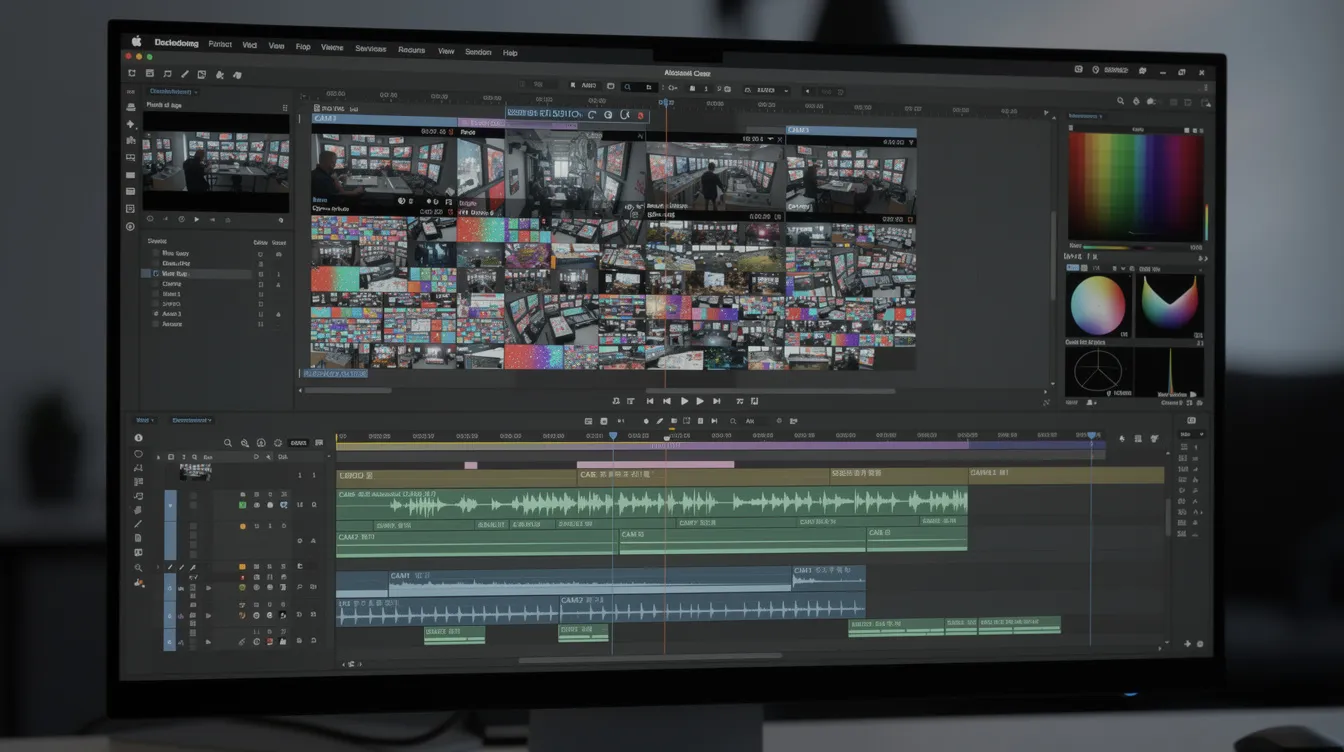
A typical multicamera edit involves switching between host and guest camera angles, using a wide shot for intros, and cutting to screenshare or slide views during detailed segments. Masterly Studios syncs audio and video tracks, replaces low-quality camera mic audio with the clean edited track, and verifies lip-sync accuracy across the full episode. A dedicated video editor handles color grading, lower-third name titles, logo watermarks, and intro stings - all matched to your brand guidelines.
Here is how a multicamera sequence moves from ingest to final export:
Ingest all camera feeds and audio tracks
Sync video to the cleaned, mastered audio mix
Select camera angles and insert screenshare or B-roll
Apply branded graphics: lower-thirds, logo watermark, intro/outro stings
Color correct for consistency across cameras and episodes
Export full episode in 16:9 at 1080p or 4K
Crop to vertical (9:16) for Reels, TikTok, and YouTube Shorts
Crop to 1:1 for LinkedIn and Instagram feed posts
Add captions (burned-in and SRT/VTT) with safe framing for graphics
Deliverables are optimized for each platform's requirements so your team can publish without rework.
From Raw Recording to Release: Our End-to-End Editing Workflow
Masterly Studios provides a repeatable post production workflow so communications teams and brand managers do not have to coordinate freelancers episode by episode. Podcast editing agencies usually offer full-service production for consistent results, and that is exactly how we operate - with a defined process, clear roles, and predictable turnaround.
The step-by-step process per episode looks like this:
Client uploads raw files (audio, video, run sheet, talking points, ad copy) by a set cut-off time
Editor performs audio cleanup and core content editing
Video editor completes the multicamera edit and adds branded graphics (if applicable)
Show notes writer drafts episode titles, summaries, and key timestamps
Senior producer runs quality control: verifies loudness, metadata, branding, and ad marker placement
Masters are exported and delivered to the agreed folder or pushed directly to the hosting platform
Editing services often provide transcripts and optimized show notes for seo optimization, extending each episode's reach beyond the listen. When choosing a podcast editing service, consider turnaround time and scope of work. Standard delivery is 3–4 business days from upload to final files. For time-sensitive releases, priority options are available - for context, We Edit Podcasts guarantees a 48-hour turnaround time as a market benchmark for hour turnaround commitments.
Revision policy matters: most plans include one round of revisions for technical fixes (volume, sync, noise) at no extra cost. Content-level restructuring or rush changes may fall outside the base scope. Collaboration runs through shared project dashboards, versioned file naming, and clearly labeled master versus social clip files so nothing gets lost.
Launch, Seasons, and Ongoing Production Support
Masterly Studios supports both new podcast launch efforts and established shows entering new seasons. Whether you are creating a show from scratch or planning a thematic series tied to a campaign, the production services flex accordingly.
A typical podcast launch package for a professional brand includes concept refinement, format decisions (solo, interview, panel, or narrative), trailer production, episode 1–3 editing, cover art coordination, and initial publishing setup on platforms like Apple Podcasts and Spotify. These podcast launch packages give institutions a clear path from idea to day podcast one without internal guesswork.
Once a show is live, ongoing support shifts to recurring editing services, calendar management for weekly or biweekly podcast episodes, and coordination around campaign-specific content - a spring product announcement, annual conference coverage, or quarterly miniseries for a university initiative. Season-based planning might look like an 8–12 episode thematic series for a consultancy or a limited-run narrative season for a foundation's annual report. Editorial guidance is woven into the process: light feedback on pacing, segment structure, and clarity, always within agreed guardrails and approval workflows.
Serious podcasters value reliability and consistency in editing services above all else. Consider trial episodes to evaluate the editor's style before making a long-term commitment - it is the most practical way to confirm fit.
Short-Form Social Clips, Captions, and Branded Assets
Every 30–45 minute episode is a content engine. Outsourcing editing can save you significant time, and it also allows creators to focus on marketing and recording rather than cutting clips after hours. Editors can provide feedback on audio quality improvements that compound across episodes and platforms.
Common repurposed deliverables from a single episode include:
3–5 vertical social clips (30–60 seconds) for Reels, TikTok, and YouTube Shorts
2–3 minute highlight reels for LinkedIn or website embeds
Audiograms with waveform overlays for audio-only shows
Quote graphics pulling standout lines from guests
Thumbnail images for YouTube and podcast directories
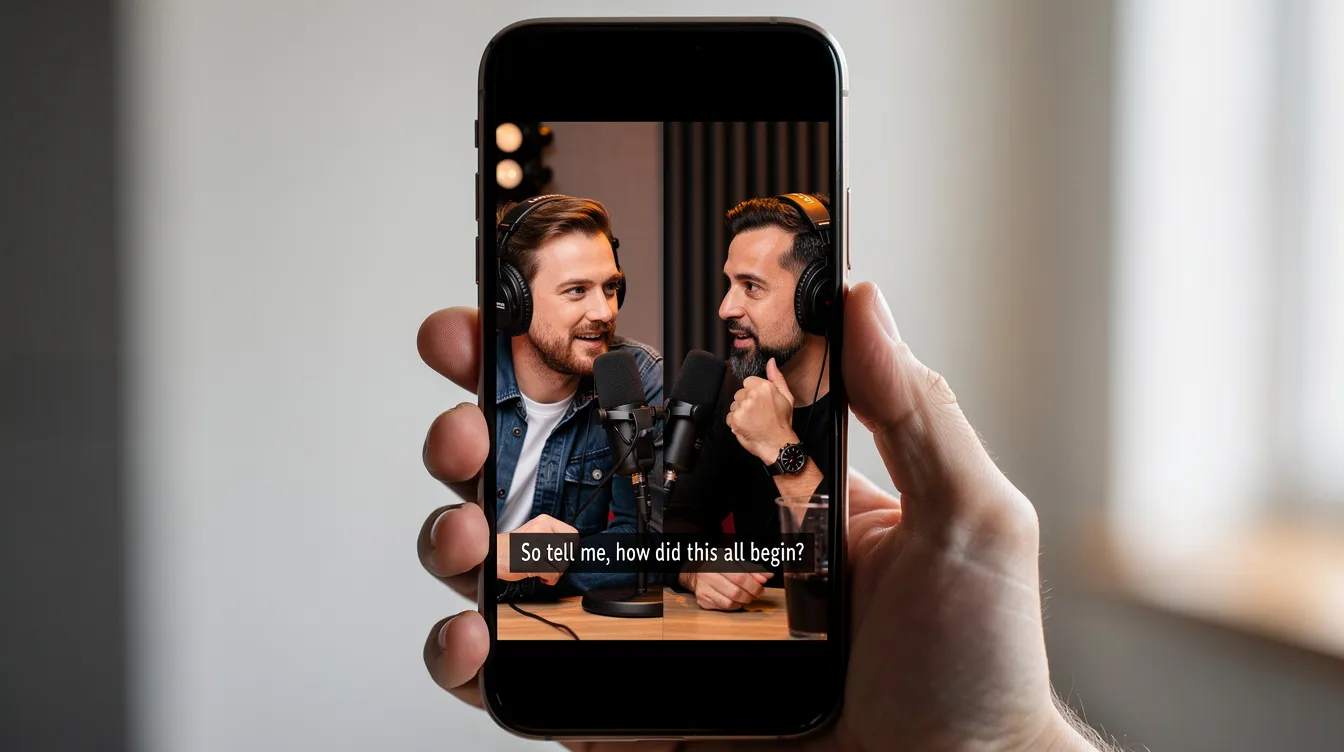
Captions serve both reach and accessibility. Burned-in subtitles work for silent autoplay on LinkedIn and Instagram, while SRT/VTT files support platforms with optional caption tracks - important for clients with internal DEI or accessibility policies. Masterly Studios maintains brand consistency across all assets using approved fonts, color palettes, intro/outro stings, and lower-third templates.
A practical workflow per episode: select 3–5 strong moments after the core edit, prepare captioned clips in vertical and square formats, write social copy variations (tone differs for LinkedIn versus TikTok), and deliver a ready-to-schedule asset folder so your marketing team can publish without additional production work.
Pricing Models, Turnaround Times, and How We Scope Work
Masterly Studios prices production services based on predictable, recurring editing needs rather than one-off, ultra-low-cost edits. Hiring a podcast editor provides professional audio quality that compounds over time - and pricing should reflect the scope, not just the episode count.
Pricing for editing services can be structured per episode, per hour, or via subscription. Common models include:
Per episode pricing tiers for audio-only versus audio plus video
Monthly retainers covering a set number of episodes plus social clips and show notes
Launch packages bundling a trailer, first four episodes, and a graphics kit
To orient expectations: We Edit Podcasts starts at $70 per episode, Pro Podcast Solutions starts at $127 per episode with a team of eight audio editors, Podcast FastTrack charges $150 per episode for editing services, and Resonate Recordings charges $159 per episode for premium editing. Fiverr provides affordable podcast editing starting around $50 per episode, though Fiverr also lists rates starting at $60 per episode depending on scope. ScrubCast offers the first episode edited for free as a trial. For full-service monthly plans, Cashflow Podcasting charges $1,199 per month for premium services. Freelance editors may offer lower costs but less consistency than agencies - a trade-off worth weighing against your brand standards.
Complexity drives scope: number of speakers, raw audio and video quality, multicamera requirements, volume of short-form clips, and whether you need add ons like transcripts or rush delivery. Standard turnaround runs 3–4 business days; rush options (24 or 48 hours) are available at premium rates. Schedule predictability keeps quality high, which is why most podcasters on retainer plans see better results than those ordering ad hoc.
Next steps are straightforward: share 1–2 sample episodes, define your target release cadence, and outline your internal approval flow. Masterly Studios will recommend a matching service tier based on your actual editing needs, not a generic rate card.
Should You DIY or Partner with a Professional Podcast Editor?
DIY makes sense for early experiments and internal updates where stakes are low. But DIY editing requires learning complex software tools - and most teams underestimate the time consuming reality. Audacity is used by almost 25% of podcasters, and options like Hindenburg Pro (designed specifically for spoken-word audio), Alitu (which allows editing by deleting text in transcripts), Descript (which features an AI tool for voice cloning), and Adobe Podcast (offering transcription editing and audio enhancement tools) all have real capabilities. But none of them replace a trained ear, editorial judgment, or consistent brand execution.
A professional workflow means dedicated audio editing, multicamera editing, branded graphics, and QA handled by specialists - so your subject-matter experts can focus on content and relationships, not waveforms. Professional editors can reduce the learning curve for technical audio production entirely. The result: consistent release schedules, executive-ready production values, and content your clients and audience actually hear and subscribe to.
Common concerns are valid and manageable. Control over messaging is maintained through approval rounds and style guides. Data security for sensitive interviews is handled via NDAs, encrypted file transfer, and private hosting. For teams working on a tight budget, comparing internal hours spent per episode against a recurring partnership with Masterly Studios often reveals that outsourcing is a great option - not just for quality, but for focus.
If your show represents your brand, it deserves the same production standards as every other communication channel you invest in. Discuss podcast editing and production support with Masterly Studios - a 20–30 minute consultation is all it takes to map your workflow, define scope, and identify the right tier for your team. This service is highly recommended for any organization that wants to produce top podcasts without pulling its team away from the work that matters most.
